Powered by Blogger.
RSS
Showing posts with label fiction. Show all posts

Tales From Research Part #2

Today, we continue the immortal journey of the Fonthill Abbey through a historical incidence. We know the abbey's main tower collapsed in 1825 and the whole manse was demolished thereafter. In my reality, the west wing, where the Fourth Earl of Wiltshire's room resided, was burned down by an act of revenge.

The first pages of the Great
Reform Act 1832.
The Representation of the People Act 1832, or Great Reform Act of 1832, influenced by the French Revolution, was an Act of Parliament in England and Wales which introduced more seats into the House of Commons from large cities and took away seats from smaller cities called "rotten boroughs". It also increased the amount of voters from 400,000 to 650,000.

Charles Gray
The Whigs favored reform, constitutional monarchy, and parliamentary rule. The Duke of Wellington's opposition to reform forced his resignation from office and he was succeeded by Charles Gray who pushed parliamentary reform with the Whigs. After much debate, the House of Lords and its majority of Tories, who advocate monarchism, supported the Church of England, and opposed reform, consented to the Bill after a threat by King William IV of revolution as all as the Birmingham Political Union led by Thomas Attwood (Oliver and Rosalind Attwood's father) and 15,000 supporters who threatened to use violence, to desist their opposition.

Two years later, the modern-day Conservative Party was created with similar philosophies to conservatism (traditionalism) and British unionism.
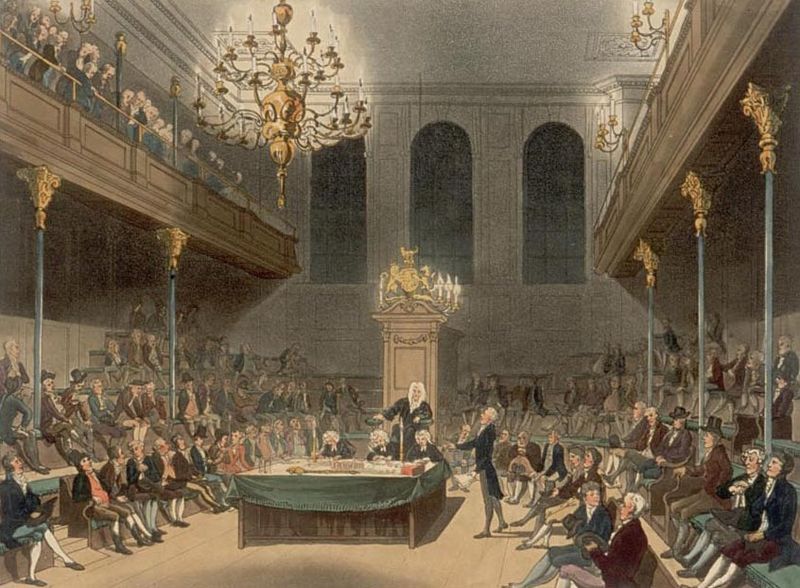
House of Commons
Effects of the Act: Since 60% of the people, specifically "male persons", were allowed to vote, 95% of the population were left without the vote, including women. In addition to being the first statutory bar to women's suffrage, most of the pocket boroughs belonged to Tory members, and tenants-at-will were created to allow voting for whomever their landlord told them to, allowing the Tories to retake the House of Commons in 1841.

The Great Reform Act of 1832 was also proceeded by protests and riots. And this is where we come to quick of our story. During a time of political turmoil and possible revolution, the middle class radicals believed in threatening the government into change. They started writing letters to influences like the Duke of Wellington and then posted them in the newspaper, waiting for a positive response from the public. After receiving no response from the politicians they wrote, the radicals moved onto the more violent means of protest. They rioted, attacking the Duke of Wellington's and the bishops' houses in London. The castle at Nottingham was burned down, as well as several serious riots appeared in Derby, Worcester, Bath, and many more. All victims were anti-reformers, Tories, and wealthy landowners. The Bristol Riot, the most destructive, consisted of 500 to 600 young men and lasted for three days, where private homes and property were looted and destroyed. Almost 100 people involved in this attack were tried in January 1832 and four men were hanged.

The 3rd Dragoon Guards violently suppressing the Bristol Riots of 1831.
Queen's Square, 20 October, 1831.

Attacks that occurred after the Reform Bill passed in 1832.

I thought there was no reason why the Earl of Wiltshire, William Kendall's late father, who was an anti-former, Tory, and wealthy aristocrat, couldn't become a victim of these attacks. 

So, this is where the real story begins...

As always, thank you for reading.


Happy writing!
Image and video hosting by TinyPic

  • Digg
  • Del.icio.us
  • StumbleUpon
  • Reddit
  • RSS

A Lost Ship On A Sea of Dreams

When you imagine your life in terms of what is going right, what stands out to you the most? Your family, your job, the fact you wake up everyday or the fact you have food on your table and a place to live? I believe everyone has at least one thing to be thankful for. Life is a gift in itself.

"The difference between fiction and reality is that in fiction everything has to make sense." -Tom Clancy
This quote couldn't be more true.

Like everyone does one time or another, we tend to think life is falling short of our dreams. Reality is not as fun or not as enjoyable as a month-long adventure gallivanting about the wild west on the back of a mustang with a handsome cowboy beside you or eating dinner with a doctor at a villa in Rome or (if it strikes your fancy) winning the Super Bowl with your dream team. Whichever dream inspires you to pursue life, it is a dream worth having indeed. But I've realized the hard way that those dreams can alter your reality. Sometimes you hope for so much more from life than you are receiving. When what you have is way more than enough for you to handle.

An exercise that works is to take time from your day to reflect on life's little blessings. If you created your time chart from last post, then you must know if you have time to use or not. Just take up to 5 minutes (no more) and look at all the good around you. According to experts, it helps to quench unhappiness and inspire a more positive outlook on life.

Remember, just because your dreams don't continue when you wake up, you can always turn them into a lifelong goal. Doesn't it feel great to have something to look forward to at the end of a long day of work? A long day watching the kids? A long day listening to a lecture at school? The money or education your earning today can go towards those long-term goals and each day you're involved in those activities your goals are becoming shorter and shorter.

One day, I will have a degree in something and I will be writing a book in a small cottage in Ireland.

What inspires you to live?


Happy writing!

-Diva J.

  • Digg
  • Del.icio.us
  • StumbleUpon
  • Reddit
  • RSS