Powered by Blogger.
RSS
Showing posts with label writer. Show all posts

Why Different Genres Truly Do Matter

Lately, I've been stretching my writing muscles through different genres. Sometimes the best way to learn something knew about the art of writing, is to experience. Of course, the science fiction project I worked on was no where near as well-organized as my romance, but it was so much fun.

Right now, I'm in the middle of reading a young adult series called "The Mortal Instruments" by Cassandra Clare, that is more urban fantasy than anything else. Think Supernatural meets Buffy the Vampire Slayer. Pure awesomeness. If you haven't seen the upcoming movie trailer, then I would encourage you to do so here:


I might be behind in the game, since the first novel came out in 2007, but I've realized two things while reading these books:

A) Ms. Clare is an exceptional romance writer,


and B) Any writer/artist who can create a whole new world and people through pure imagination or experience deserves kudos.


Here are the major fiction genres and what an author can learn from each:

  • Action and Adventure = Writing plotlines that carry throughout the book.
  • Chick Lit = Writing good characters around one person.
  • Children's and Picture Books = Writing meaningful prose in a small amount of space.
  • Commercial Fiction = Having good sentence structure, vocabulary, and pacing for easier readability.
  • Contemporary
  • Crime = Weaves suspense and plot along with the main character's views.
  • Erotica= Writing passion that sizzles on the page.
  • Family Saga = Weaving sub- and main-plots throughout the story that could lead to a series.
  • Fantasy and Dark Fantasy = Creating worlds from nothing or using real-life places as backdrops for creativity.
  • General Fiction = Writing with many genres at once to create the world that is envisioned.
  • Graphic Novels = Turning pictures into words or vice versa (except most of us do this in our heads).
  • Historical Fiction = Making your research show on every page.
  • Horror = Writing to place fear or terror into the reader, both conscious and subconscious, so they keep turning the pages.
  • Humor = Creating a more entertaining dynamic for your story.
  • Literary Fiction = Writing an adventurous plot that is well-thought out and meaningful to the reader.
  • Military and Espionage = Writing with a focus on plots with a high-level of action.
  • Multicultural and Gay/Lesbian = Writing diverse characters who overcome emotional obstacles.
  • Mystery = Weaving clues into the story that lead to a surprise ending.
  • Religious and Inspirational
  • Romance = Weaving a storyline in between two characters who must have a happy ending.
  • Science Fiction = Writing with a focus on futuristic technology and making it affect the characters around it.
  • Short Story Collections = Making a story believable and entertaining in a short number of pages.
  • Thrillers and Suspense = Weaves suspense and tension throughout the story without losing pace.
  • Western = Focusing on one element to make the whole.
  • Women's Fiction = Writing physical and sometimes emotional obstacles for characters to overcome and to unify their experiences toward the end. 
  • Young Adult = Writing from the perspective of a teenager and how they see the evolving world around them.
Sounds a bit like I've just listed the definition for each genre, right? Well the explanation is its own reward.

If you would like to leave a comment and tell me how you think writing in different genres could help a writer to grow in their craft, I would truly love to hear from you! Thank you for reading.


Happy Writing!
Image and video hosting by TinyPic

  • Digg
  • Del.icio.us
  • StumbleUpon
  • Reddit
  • RSS

A Summary Is A Synopsis Is A Summary

Dear readers, thank you for sticking with me through everything. As I write more query letters for agents and  fine-tune the synopsis for editors, I cannot help but notice how little is posted about the latter. What is it about the synopsis that scares writers? The best way to get over the fear is to write it first. If you know the plot of your story, then you should have no problem dishing out the details. I think it even works better than an outline in some cases.

Remember: The synopsis isn't a sales blurb, neither should it leave the reader in suspense. So, when writing a synopsis, tell all.

So, we all know a synopsis is a description of the best parts in our books, but did you know there are different kinds? Have you ever wondered what the difference between a brief synopsis and a full synopsis is?

A brief synopsis is a detailed description in present tense usually 350-450 words and between 1-2 pages long. Don't confuse this with a "brief summary" which is better known as a pitch. 

A short synopsis is a detailed description in present tense usually two to ten pages long, and five pages at the most.

A full synopsis is a detailed description in present tense of the whole book with each page representing a whole chapter or one synopsis page for every twenty-five manuscript pages.

The most popular request I've seen from editors/agents is a brief synopsis of about 1-2 pages. This doesn't mean you shouldn't write a longer one. Sometimes the best way to choose the best lines is seeing a bigger picture of your work, a broader landscape.


Here are some synopsis writing tips for fiction writers:

  • Take one step at a time. 
  • Read through each page of your manuscript and write a summary of each chapter or so on.
  • Look for themes and symbolism as you read.
  • Take out the most important plot points and characters, anything that moves the story forward, and put them in the synopsis.
  • Capitalize the main character's names the first time they are mentioned in the manuscript.
  • Double space like you would your manuscript.
  • Write to entice the reader. Think: Hardcover book jacket blurb meets enthusiastic movie description.
  • Write in present tense, third person.
  • Edit, edit, edit.
  • Remove as many adverbs and adjectives as possible and replace them with action.
  • And please don't leave the reader in suspense.

(For more information about these tips and more, please visit: How To Write A Synopsis by Marg Gilks and Writing A Synopsis by The Literary Consultancy [TLC])

Writing a synopsis can be a scary endeavor, but anything is possible when you put your mind to it.

I look forward to seeing you all on St. Paddy's Day for an Irish recipe and a giveaway!
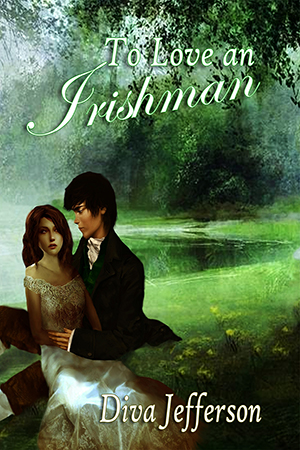
What better way to celebrate the one year anniversary for the release of To Love An Irishman by Diva Jefferson? Take care.


Happy writing!
Image and video hosting by TinyPic

  • Digg
  • Del.icio.us
  • StumbleUpon
  • Reddit
  • RSS

Confessions of a 20-Something Author: Part 2

Well, I've joined the workforce again. I'm working days at a fast food joint and doing schoolwork/promoting/writing by night. I feel like a vampire. I haven't slept a full-night's sleep in days. Even when I literally pass out at a decent bedtime hour, I stay awake all night fretting/thinking.

For the past two weeks, I've been so busy, I didn't even remember to turn in some assignments. I know what you're thinking, I shouldn't have gone to college when I had so many other responsibilities, but I'm not going to allow lack of time to come in the way of my dreams. There is no excuse. Besides, I wanted to do something to make myself happy, because the wedding I planned 6 months for, didn't happen. (Don't worry, we're still engaged.) This is the main reason why I got another job: money. Other than the 20 hours plus of classwork/homework for 2 classes, college is great. I could write essays like nobody's business. :)

If there is such a thing as writing withdrawal that is what I'm experiencing right now. Without writing, I'm completely lost. I love it even more than college. Even more than playing video games. I want it to be the only thing I ever do right in my life. But without a roof over my head...writing would be very hard to do, indeed. Do you want to know why I write in the first place?

The truth is:
I write to escape from reality.

I'm not saying everything I've experienced (so far) is worse than anyone else, but to me, to what I want from life, it could've gone very different. By now, I'd have a Bachelor's Degree in English and I'd be on the next plane to Ireland/England to teach some type of writng/reading course at one of their schools. Or maybe I'd just travel the world teaching people to read. Either way, I'd get around.

Of course, if I never embarked on my current path (life is funny that way), I probably wouldn't have the best fiance in the world. Although, we swear that we'd find each other no matter what. :)

Good thing there is such a genre as "Historical Romance", because it's saved me a lot of traveling remorse. Every book is an adventure in a time/place I haven't visited yet. It takes me away from the day to day struggle. I just hope I could do more for my readers than write a blog once a week. :)

Last week, I talked about priorities and what people think is more important than writing, this week I vow to write no matter how much time I have. I. must. write. book. two. no. matter. what.

I'd love to hear your confessions. If you have any to share, please put them in a comment below. Thank you for reading!!! Until next time...


Happy writing!
Diva J.
Image and video hosting by TinyPic

  • Digg
  • Del.icio.us
  • StumbleUpon
  • Reddit
  • RSS

Naughty or Nice Giveaway Hop!!!

nautghy or nice
The Naughty or Nice Giveaway Hop was organized by Nat @ Reading Romances!

I wanted to thank everyone for stopping by and participating in my contest. For all those who've stuck with me and supported me since the release of my debut book, I salute you.

As you all know, my book To Love An Irishman is nice. Although, there is a naughty bit at the end. :P

What makes a book nice? In my opinion:
--A specific (low) number of love scenes.
--Romantic dialogue.
--The hero/heroine doesn't make brash decisions that lead to harming others.
--The villain isn't ruthless.
--The ending is happy.

Of course, your definition may differ and I would love to hear it. :)

She is left with an offer she cannot refuse...
Upon his death in 1823, English nobleman, Lord Peyton leaves his daughter Lady Aveline with two choices—stay single and inherit only a small farm in Ireland, where she might just be able to eke out a living, or get married and live in luxury, inheriting all his wealth and property. Fiercely independent, Aveline heads for Ireland only to run afoul of her father’s farm manager, the devastatingly handsome Ciaran O’'Devlin. Alone in a strange country, Aveline yearns for love and friendship, but Ciaran offers only criticism and disdain. Confused and angered by strange visions and her growing attraction to Ciaran, Aveline is determined to make the farm prosper—despite the insufferable Irishman.

He has a secret he cannot reveal...
Ciaran mistrusts Aveline’s intentions and refuses to admit that a willful, English woman now owns the farm that should have been his. Although he insists Aveline should go back to England, he cannot deny their budding passion. Yet, he knows—even if she doesn’t—that nothing will come of it. Not only can’t a poor Irishman marry an English noblewoman, but when Aveline learns of his past, she’ll want nothing more to do with him. Ciaran has always known that each decision carries a consequence, but it’s only when he stands to lose Aveline that he realizes what a heavy price his past decisions may have.

What you can win here: An e book copy of To Love An Irishman.
Number of winners: 1
Open to (INT, US or US/CAN): INT
How to enter: Just enter through the Rafflecopter below. :)
a Rafflecopter giveaway

Hop and enter the other giveaways!


Happy writing!
Diva J.
Image and video hosting by TinyPic

  • Digg
  • Del.icio.us
  • StumbleUpon
  • Reddit
  • RSS

Confessions of a 20-Something Author: Part 1

If you came here, expecting a life story, then please read my autobiography in forty or so years. This is a series of confessions that I will tell you in relation to my publishing journey. This is for anyone who ever picked up the art of writing or anything they dreamed of doing and found discouragement. Sometimes, it comes from your friends and family, co-workers, other people in your profession, and yourself. Personally, I think we are our own worst critics. Since we are the author's of our lives, we take the blame for everything that doesn't go according to plan, and we punish ourselves.

No matter what is holding you back, don't EVER stop what you love to do. Why spend your life wallowing in the day to day or finding another outlet to enjoy yourself? If you believe what you love to do is just a hobby, then you are not driven, and your main focus should be is to find motivation. Success never comes before hard work, unless for some reason, someone did everything for you. I really hope this is not your case, because I have more faith in you than you have in yourself.

Speaking of faith, here is my first confession: The one person in my life I thought would stand by my side, told me that I'd never go anywhere in life and that writing shouldn't be my main priority.

Okay, maybe this person is a generalization of a few people fused into one. Anyone who doubts someone this much, needs to first get their own priorities straight before offering their disheartening advice. The fact of the matter is that I've heard this from many people throughout my life. Friends, family members, significant others, etc. They are pretty much the people I care about the most. Not knowing how they felt about me was one thing, but hearing it was entirely another. Actually, it was the best motivation I'd ever received. Not even a rejection letter could make me this ambitious. It was like receiving a million-dollar cash prize. Well, maybe not that great. :)

Don't get me wrong, you will become emotional and feel lost, but then you consider it a challenge to meet and beat their expectations. And I'm not even competitive. Believe me, I've been trying to overturn everyone's expectations my whole life. I turn all of those doubts upside down.

When you let your past come in the way of current goals, your view of success may change. Yes, you will no longer consider your profession as a hobby and take it more seriously while working for what you need to survive on the side.

I've read a few articles where people wish they could reach success at an earlier age. Others believe youth is wasted on the young (In which, this is true on many occasions.). For those who think they wasted their youth on less productive endeavors, I salute you. Either you worked really hard to get where you're at right now or you had a great time and laughed. When I say this, I'm coming from the perspective of the youth. College, working retail/fast food jobs to pay rent, etc. is a major setback for people my age. I don't have the time nor resources to set my writing career into full motion. I don't have the funds to attend conferences, or the free time to do anything other than write the books. Looking up publishers and agents is very time-consuming. Every time you think you have a working list, another year passes and it's out of date. :)

In order to cope with the day to day stress, I've gone on a few writing hiatuses, (lasting from one to three months) in order to work more hours, go on vacation, etc. And I regretted every moment of it. Well, maybe not the vacation part. Anyways, wherever you are in life, don't give up on your dreams. Luckily, they don't have a deadline and are attainable at any age. I believe in sacrifice, but not at the expense of your whole being. I love writing so much. It's become a part of me more than anything else. I'd be lost without it.

Thank you so much for reading! Join me next time for the Naughty or Nice giveaway hop and another author confession! :)


Happy writing!
Diva J.
Image and video hosting by TinyPic

  • Digg
  • Del.icio.us
  • StumbleUpon
  • Reddit
  • RSS

Finding Your Novel's Happily Ever After


Dear Readers, I apologize for the lack of a blog post last week. I was so pressed for time, I couldn't get myself to think of a topic to write about. Anyways, I'm on the last few thousands words on my work in progress, and I must say the journey through this book has been a very enlightening one. My characters have shown me a lot about themselves I never knew before. I can't wait to write more about them. I used to be so good at endings. In fact, I'd write the ending first, then write from there, but with The Earl's Son, I tried something different.

I will admit I did have an ending planned for the book all along, but I knew it would come about way differently than I anticipated. Of course, it wouldn't be a Victorian romance novel without the happily ever after!


Every book deserves to have a perfect ending.

Here are the different types of HEA endings:
-The hero/heroine gets what they desired and ends up happy.
-The hero/heroine does not get what they desired, but something better, and is happy about it anyway.
-The hero/heroine finds his/her original goals were flawed and changes for the better as a result, thus ending up happy in the end.

Unacceptable HEA endings:
-An unknown character shows up to save the day.
-An unknown conflict occurs that only enhances the conflict of the story.
-You keep the story going past an implied ending. 
-You end a single title romance with a cliffhanger.

Your HEAs may be different than mine, but I hope you get the idea.

Here are some tips on writing the perfect ending:
1. Satisfy the reader. Make sure the good guy wins and the bad guy loses.
2. Tie up all loose ends. The main plot and all sub plots should be resolved. (Sometimes you could tweak this step for books in a series.) Your hero/heroine should also solve their own problems.
3. Make the ending flow with the rest of the book. The hero isn't going to walk away from the heroine at the end if he had spent the whole book chasing after her. Also, the ending should be obvious from the information given throughout the novel.
4. Match the ending's emotion with the beginning and middle. It's not fair to your readers to send them on such a wonderful adventure only to crash their plane at the end. This won't encourage them to buy anymore of your books.
5. Your reader should feel the same emotions as your hero/heroine. If they can't envision your character's happy thoughts and feelings at the end of a novel, you haven't fully developed your character's personalities, and you should address this ASAP.
6. Finish with a strong sentence. This sentence should be just as powerful as the one you started the whole story with. It could reflect your story's theme, explain the title, or you could restate the first line.

(For more information, please read: How To Write The End of A Novel by C. Patrick Schulze and Keys To A Great Ending by Crista Rucker.)

Thank you so much for reading. Next week, on Thursday, I'll be participating in the 18 And Over Giveaway Hop. I'll see you then. 
One last thing before I go: Do you have any tips on writing the perfect ending? Please feel free to post your response in a comment  (and subscribe if you haven't already done so) below.


Happy writing!
Diva J.
Image and video hosting by TinyPic

  • Digg
  • Del.icio.us
  • StumbleUpon
  • Reddit
  • RSS

There Are A Lot Of Writers, But...


Have you ever had a long week? Where no matter what you do you can't get anything done? Or, so it seems. Class starts next week and I'm pulling hair out trying to finish my work in progress, The Earl's Son, and an editing project for a client. Who thought writing a love scene would be so hard to do? Especially when it makes or breaks your character's relationship with each other. This is why I put them near the end. It's almost like a finale. You know, when all the fireworks go off at once during the Fourth of July celebration and lots of pretty colors appear at once. To me, this is how those love scenes reflect on the paper. In a romance, they are the character's right of passage. Of course, sometimes they start the problems, not end them. I think a good balance is in order when this happens. Stronger relationships on all levels lead the reader to a much more fulfilling HEA.


<----We all feel like this sometime. Am I right?

Anyways, I've got lots of ideas in my head and I'm experimenting with several at a time to see what works and what doesn't. Writing isn't something you do overnight. It takes time like everything else important in your life.When you find yourself at the lowest of the lows and completely at a loss for words, just remember one thing:

There are a lot of writers, but only one YOU.

Yes, it's true. No one can write like you do, no one can create worlds in the same way.

Never give up. Never surrender.
Your readers are counting on you.

Thank you for all of your support! I really appreciate it. :)


Happy writing!
Diva J.
Image and video hosting by TinyPic

  • Digg
  • Del.icio.us
  • StumbleUpon
  • Reddit
  • RSS

Blog Hop: What Do You Look For In A Review?

review

What do you look for in a review?

I love all reviews from my readers. Just supporting me through buying my book is wonderful. My favorite reviews are ones where the reader highlights their favorite parts of the book. Their likes and dislikes (if applicable) are important to me. I could use this input in making decisions in my future novels. If everyone loved the description about Ireland in To Love An Irishman, then I'll try to add more details in my current work in progress.

By all means, if something about the book is not working for you, don't be afraid to tell the author. 
Authors grow with experience.

I'd like to see less references to grammar/spelling and more input catered to content/structure. I've read many reviews where the reader just wanted to let the author know the story contained lots of errors, but said nothing about the story, plot, anything else.

Reviews are very important for authors. They provide unbiased feedback on the piece from someone who is not acquainted with the writer. This input influences future works and can help authors strengthen their voice. 

If you have anything to say about a book, please leave a review for the author on a website where it's available for purchase. (Publisher's site, Amazon, Smashwords, Goodreads, etc.)


In lieu of this post, I'm giving away a copy of To Love An Irishman in hopes *crosses fingers* that whoever wins will offer to write a review for me on a website of their choosing. :) (Please leave your email address in a comment to participate. Winners will be announced on Tuesday!)


Thank you so much for reading!
Feel free to visit the other blogs on this hop to show your support! :)


Happy writing!
Diva J.
Image and video hosting by TinyPic

  • Digg
  • Del.icio.us
  • StumbleUpon
  • Reddit
  • RSS

Simply Self-Promotion

When a writer finishes a novel and lands a contract with a publisher, his/her work is not done. Actually, it's far from being over with. Whether you traditionally publish or self-publish, the road is still the same. There is a lot of promotion and marketing ahead that only you can do. Yes, some publishers will kick-start your career by knowing people in the right fields, but most of the time you're the only one who can meet with your readers and give them a reason to read your books.

Here are some ways to start the process before you finish the work in progress:
--Social media networks are the key. If you don't have an established Twitter, Facebook, LinkedIn, or Myspace account, those readers who join those sites to find the latest information about their favorite authors will miss out on what you have to offer.

I'd wear one, would you?
--An author website is all the rage. This is the best way to show readers your latest releases and provide press information.

--A blog comes in handy for writers who like to help other writers in the craft and connect with even more readers. At the end of the blog tour for To Love An Irishman, I joined my first blog hop and I had over 40 people comment on one post!

--Make a name for yourself. A brand, even. You could create a tagline or interact with as much people as possible. The more readers who hear your name will remember it in the future.

--Other ways to promote include hosting a giveaway on Goodreads, having a release party for your book at your house or a friends, making t-shirts like the one above, creating a hangout session on Google+ to interact with your readers through video, etc.

It doesn't matter what you do, just get out there. Yes, I could've done a lot more for my debut release, attended conferences and hosted a party in my hometown, but I chose to do most of my marketing online. I created a video during the book release party, and I was interviewed by several blog owners.

The best thing about self-promotion is that you learn more tips and tricks along the way.

Right now, I'm on the home-stretch of my work in progress. In between writing and the other projects I have going on, I'm starting the promotion for my book. And it doesn't have a publisher yet. :)

Do you have any tips that are not mentioned here? How do you self-promote your books? Please tell me in a comment below. Thank you for reading!


Happy writing!
Diva J.
Image and video hosting by TinyPic

  • Digg
  • Del.icio.us
  • StumbleUpon
  • Reddit
  • RSS