


Hello, Readers. Sorry about another belated post, but there is so much going on! Between querying agents and working on the final edits for The Earl's Son, I only have time to write one a month, but I hope to offer invaluable advice nonetheless.
Anyways, this time we are talking about conferences. I have never been to one, but sometime in the future (as my writing career hopefully grows) I'll be able to see what all the hubbub is about. :)
From what I've researched online and read through other writers' blogs, here are the pros and cons of conferences:
Pros:
1) Pitch your work directly to agents and publishers.
2) Meet fellow writers and make new friends.
3) Attend workshops and activities to help you grow as a writer.
4) Meals are included in the registration fee.
 Cons:
Cons:
1) Rejection in person can hurt worse than over email or phone.
2) If you don't know anyone there, it might be hard to step forward and introduce yourself to a room full of strangers.
3) Sometimes the workshops are only catered to a specific genre or specialty, so they might not be beneficial to you.
4) Cost could become too high when factoring in travel distance as well as the hotel bill.
Of course, some people will swear by them, while others think it is a waste of time. The choice is really yours. If you have the money to spend, and the right agent or editor is waiting for you there, then by all means have a great time.
I think the biggest mistake people make is going to a writing conference because everyone else is. Some writers (gasp!) thoroughly enjoy socializing with others. I think you should attend as a benefit to your career. Nothing says dedicated like dropping $500 and flying cross-country to see a friend you haven't talked to in a year!
As always, thank you for reading.
Happy writing!
My Pros and Cons Concerning Conferences


Finding Your Novel's Happily Ever After


There Are A Lot Of Writers, But...
Have you ever had a long week? Where no matter what you do you can't get anything done? Or, so it seems. Class starts next week and I'm pulling hair out trying to finish my work in progress, The Earl's Son, and an editing project for a client. Who thought writing a love scene would be so hard to do? Especially when it makes or breaks your character's relationship with each other. This is why I put them near the end. It's almost like a finale. You know, when all the fireworks go off at once during the Fourth of July celebration and lots of pretty colors appear at once. To me, this is how those love scenes reflect on the paper. In a romance, they are the character's right of passage. Of course, sometimes they start the problems, not end them. I think a good balance is in order when this happens. Stronger relationships on all levels lead the reader to a much more fulfilling HEA.

<----We all feel like this sometime. Am I right?
Anyways, I've got lots of ideas in my head and I'm experimenting with several at a time to see what works and what doesn't. Writing isn't something you do overnight. It takes time like everything else important in your life.When you find yourself at the lowest of the lows and completely at a loss for words, just remember one thing:
There are a lot of writers, but only one YOU.
Yes, it's true. No one can write like you do, no one can create worlds in the same way.
Never give up. Never surrender.
Your readers are counting on you.
Thank you for all of your support! I really appreciate it. :)
Happy writing!
Diva J.
The Best Writing Advice I'd Ever Received
Dear readers,
 I'm on the home stretch for completing this novel and I'm so excited to announce that it will be part of a series or saga. I much prefer the term 'saga', because it sounds more epic. The problem is I can't seem to come up with a series name yet. (I'll address those concerns later on in the post.) Although, I do have several other books in mind for the saga, The Earl's Son is actually a sequel to another book I wrote years ago.
This Victorian Era saga is about an aristocratic family who are victims of political strife. There is action, suspense, revenge, mystery, deception and above all, romance. I hope you enjoy the novels as much as I do writing them.
My theme for this post is: What is the best writing advice you've ever received?
Believe it or not, after years of talking to other writers, joining workshops workshops, and participating in a critique group, I've heard a lot of great advice on writing. One such recommendation came from none other than my fiance who reads a lot of Fantasy (Jim Butcher, Tracey Hickman/Margaret Wies, etc.) Our relationship involves a lot of conversation and despite his inexperience in my genre, I read him what I've written for the day in hopes to receive an opinion that sticks. So often he'd repeated a phrase which never left my mind. I think about it a lot when I write.
The words I remember most from him were...
Don't underestimate your readers.
It's true. Readers know more than they admit. Of course, a writer could give a whole history lesson on farming (like I did in To Love An Irishman), but it's really hard to avoid describing things that are relevant for a topic without thinking your reader will find the content boring. In my current project, I have several fight scenes where I describe my hero using martial art styles. You'd think most women reading romance novels wouldn't know the actual names of these moves...so, I describe the process. My fiance encouraged me to be more descriptive and hold less back in my writing.
Don't be afraid to open up to your readers. After all, they want the whole experience your novel gives them.
Including, the parts you think are boring.
Description and details go along way. Use them to your advantage.
Please feel free to share your advice in a comment below. Oh, and if you also have recommendations for naming a series or saga, then share those, too. Thank you for reading!
Happy writing!
Diva J.
Thank You
Today, I would like to take the time to say: Thank you. For everything you've done for me. For your support, your kindness, your love, and your readership.
Without you, readers/friends/mentors/writers, there would be no me.
"The Earl's Son" is over 70% written. I can't wait to show it to the world.
I know I would probably write something else, but I have two manuscripts who need my utmost attention right now. Soon, I won't have the time to spend on them and I must embrace every moment I do have immersed in my writing. :)
Happy writing!
Diva J.
To Be Or Not To Be Continued...
Since we all read last week how I write with passion, now you have a chance to learn how I add spice to my novel. Yes, I call suspense/conflict the flavor ingredients, because they are integral parts of your book's recipe. We all know the four parts of a book: The set-up, the response, the attack (I call it rising action!), and the resolution. For movies with three acts, the response and the attack are combined, and this second act is called the confrontation. (You could read more about this on Storyfix.)
I love reading and learning my craft. Writing romance is so exhilarating, but sometimes I like to research another genre so I could improve my own writing and add a little flavor. I think when you look outside the box, you experience another perspective you might not have noticed before. In my most recent works, you'll notice how I sprinkle just enough suspense in to keep my readers interested.
Here are 5 ways you can add suspense in your novel:
 |
| Probably one of the most iconic suspense tactics. |
2) Raise the stakes and keep them high. Life gives us good/bad consequences no matter if we make wrong or right decisions. This also works for your hero/heroine. Without a crisis, or something causing them not to reach their goal, our books would be boring indeed. This is one of my favorite ways to add suspense, because in a way you as the writer are calling the shots. In my novel, there is a carriage crash, a fist-fight, a carriage chase, and a shooting to name a few instances where the tension is raised, but the plot is slowed down when this happens thus causing a complication. Don't hold back on your writing, readers could tell the difference.
3) Include many complications. I know stakes could count as complications, but don't confuse them with the pointy, wooden weapons we use on vampires! Use your antagonist to the greatest advantage. Not only is time against your hero/heroine, but the choices he or she made can create a dilemma. Ex: Alex grinned. All talk, no play, makes the bandits run away. Now that he was free and the woman was favorably shaken, he had two options: Escape, or free her from her controlling brother. From this example we see my hero has a complication. Whether he truly cares about the woman he wanted to free or not, his choice is not going to be easy, because he still has "her controlling brother" (the villain) to overcome first.
4) Create a memorable villain. Don't make your villain so awful that you'd want him to die off in the first or second chapter. At least, not yet. Drinking, gambling, and bedding wenches is a very mediocre way of describing him in a way where you are disgusted in his habits, but he is worth keeping around. Of course, other genres have different ways of showing their antagonist. Mysteries use a transparent villain to hide who they are until later, while an actual suspense wants you to know who he is right now. I think romance tends to mix the two or at least use either to the greatest advantage in the novel. No matter what you do with the villain, he has to be a worthy enough contender against the hero/heroine. In my work in progress, you find out fairly soon that the antagonist, Oliver Attwood, is the heroine's brother and has a firm dislike for the hero's family. These are givens. Although you know his ties with the hero/heroine, this does not set him apart from anyone else. You learn his intelligence and motivation later on. This makes him memorable. (Don't worry, women can be villains, too!)
Most readers care about the characters' journeys above all. We know a romance will end with a happy ending, we know the villain in a mystery will be discovered at the end, etc. The most important part of a story is how they got there.
Of course, mystery and suspense writers will give you more ways and an even broader insight into suspense, because that is what they thrive upon, but these are the ways I incorporate conflict into my romance. Many of the examples I give you are from my current work in progress, The Earl's Son. You may think I'm giving away pertinent information about the plot, but what I'm actually doing is showing you the spices I use for my recipe, not the main ingredients. ^_~ For more suspense topics not covered here and to read someone else's perspective, please visit: Writers Digest: 9 Tricks To Writing Suspense
When you think you can't, you can. When you think you can, you will. Never give up!
Do you use conflict/suspense in your novels? If so, please feel free to share some of your tips with the rest of us. I do love learning new tricks of the trade. :)
Happy writing!
Diva J.
The Rules of Writing With Passion
 When an author tells a story, no matter if they write romance or not, they are doing what makes them happy. At least, I hope you do what you do for good reasons. I mean we can't depend on the money coming in, and who knows how many people will buy your finished product (if/when you get published), but what we do know is how to make what we write the best. I came up with this plan to add more passion into my work when I was reading someone else's book. The emotion on every page was heightened and the character's seemed to connect through the air. I know this sounds crazy, but it is possible for everyone to make their pages sizzle with words.
What Does The Word Mean Literally?
I've heard many people talk about the importance of words in a novel. The way we write them in determines their meaning and could add emphasis to the message we convey. Some writers, especially those who like history, would never let an 'okay' slip from their characters or allow them to respond with an 'awesome'. I know I certainly try not to.
I've always had a fascination with the English language. One of my dreams growing up was to go to college and get a degree in the subject. Every time I am interested in something, I don't stop finding out as much as I can about it. I guess you can say I endeavor to persevere.

Today, I wanted to show you ten words that have changed meaning over the years.
1) Decimate - The original meaning was "to reduce by one-tenth", now it means "to destroy a great number of". Ex: The population was decimated by a plague.
2) Disinterested - This word used to mean "not interested", now it means "not influenced". Ex: ...a disinterested decision by the referee.
3) Enormity - Some know it as "outrageous or heinous character", now people refer to it as "greatness of size, scope, extent, or influence". Ex: The enormity of such an act of generosity is staggering.
4) Fortuitous - It used to mean "occurring by chance", but now means "lucky". Ex: ...a series of fortuitous events that advanced her career.
5) Fulsome - Which used to mean "abundant, generous, full", but now means "disgusting; sickening; repulsive". Ex: ...a table heaped with fulsome mounds of greasy foods.
6) Ironic - Which used to mean "counter to expectations or what is appropriate", but now means "coincidental". Ex: It was ironic that I was seated next to my ex-husband at the dinner.
7) Literally - It used to be confused with "figuratively", but now it is used "in the literal or strict sense". Ex: What does the word mean literally?
8) Notorious - It originally meant "widely and unfavorably known", but now people use "infamy". Ex: An infamous gambler.
9) Peruse - Which used to mean "to use thoroughly", now it means "to read through with thoroughness or care." Ex: ...to peruse a report.
10) Plethora - Its original meaning was "overabundance; excess", but now it means "abundance". Ex: ...a plethora of advice and a paucity of assistance.
(Words found on Daily Writing Tips and in the Dictionary.)
Of course, all these words are listed in the dictionary with both meanings, but when it's spoken in modern-day conversation, you'll better understand their relation to the sentence in which it's used.
Do you know any words that have changed their meanings? I'd love to know your thoughts in a comment below.
Happy writing!
-Diva J.
My Top 5 Watched Movies For Research
 In this adaptation from Elizabeth Gaskell's novel set during the Victorian Industrial Revolution, Margaret Hale is forced to move to Milton, which is in the north. She takes offense to the people, and most of the time she does not agree with the handsome textile manager's, Mr. Thornton's, views. Although their difference in beliefs overwhelm them, there is a chemistry that ignites their passion.
Wuthering Heights (2009):
 Given the choice between a life of comfort (with Edgar Linton) and a profound love (with Heathcliff), Cathy's actions have repercussions for multiple generations in this haunting story of turbulent passion and revenge.
Jane Eyre (2006):

Cranford (2007):
 In the 1840s, Cranford is ruled by the ladies. They adore good gossip; and romance and change is in the air, as the unwelcome grasp of the Industrial Revolution rapidly approaches their beloved rural market-town.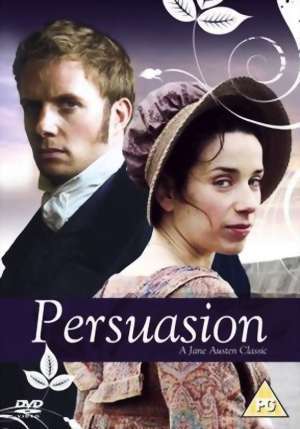
Uncertain Wonders
WARNING: You might read some ranting and raving about authors changing their manuscript's genre to make a sale. Please bare with me! :)
Last week I read an article about an author who changed their book's genre in order to make a sell. I have mixed opinions about this matter. I am a firm believer in not conforming to society. For those who feel they should change their book for a specific publisher who accepts manuscripts out of their league, I think this is qualified as cheating. Why don't you leave the genre alone so others who are passionate about it could get a step in? Instead, you strip your novel of important elements and pawn it off with another name.

As a historical romance author, I will NEVER write to impress a market nor will I change a piece for someone else's benefit. I want to sell my work to those who'd appreciate my stories the way they are as much as I do.
On the other hand, if you are not already an established author, then changing your genre is a part of your growing process. Some people find their niche after they've written dozens of books about something else. Say you've loved fantasy all your life, but the right story doesn't come to you until ten years later. Well, you've wanted to write this romance for a while now, so you do that, and it sells. Then the fantasy idea comes along and you write a great story that you want to pitch, but your name is attached to romance. You could a) get a pen name, b) stop writing romance, and focus solely on your fantasy career. I would totally go for the pen name idea, because you never know if your original name gained a following or not. Your readers come first.
Okay. I'm done. Yes, I feel better. Thank you for asking. :)
The wedding plans are coming along. I am waiting to go visit the ceremony location sometime this month. So, until that happens, I can't do anything else.
The two works in progress are going along smoothly. I've hit over 20,000 words in Loch Lomond, and over 10,000 words in The Earl's Son. Wish me luck!
Thank you so much for being patient with me and reading this far. YOU rock!
Happy writing!
-Diva J.