Powered by Blogger.
RSS
Showing posts with label heroine. Show all posts

Finding Your Novel's Happily Ever After


Dear Readers, I apologize for the lack of a blog post last week. I was so pressed for time, I couldn't get myself to think of a topic to write about. Anyways, I'm on the last few thousands words on my work in progress, and I must say the journey through this book has been a very enlightening one. My characters have shown me a lot about themselves I never knew before. I can't wait to write more about them. I used to be so good at endings. In fact, I'd write the ending first, then write from there, but with The Earl's Son, I tried something different.

I will admit I did have an ending planned for the book all along, but I knew it would come about way differently than I anticipated. Of course, it wouldn't be a Victorian romance novel without the happily ever after!


Every book deserves to have a perfect ending.

Here are the different types of HEA endings:
-The hero/heroine gets what they desired and ends up happy.
-The hero/heroine does not get what they desired, but something better, and is happy about it anyway.
-The hero/heroine finds his/her original goals were flawed and changes for the better as a result, thus ending up happy in the end.

Unacceptable HEA endings:
-An unknown character shows up to save the day.
-An unknown conflict occurs that only enhances the conflict of the story.
-You keep the story going past an implied ending. 
-You end a single title romance with a cliffhanger.

Your HEAs may be different than mine, but I hope you get the idea.

Here are some tips on writing the perfect ending:
1. Satisfy the reader. Make sure the good guy wins and the bad guy loses.
2. Tie up all loose ends. The main plot and all sub plots should be resolved. (Sometimes you could tweak this step for books in a series.) Your hero/heroine should also solve their own problems.
3. Make the ending flow with the rest of the book. The hero isn't going to walk away from the heroine at the end if he had spent the whole book chasing after her. Also, the ending should be obvious from the information given throughout the novel.
4. Match the ending's emotion with the beginning and middle. It's not fair to your readers to send them on such a wonderful adventure only to crash their plane at the end. This won't encourage them to buy anymore of your books.
5. Your reader should feel the same emotions as your hero/heroine. If they can't envision your character's happy thoughts and feelings at the end of a novel, you haven't fully developed your character's personalities, and you should address this ASAP.
6. Finish with a strong sentence. This sentence should be just as powerful as the one you started the whole story with. It could reflect your story's theme, explain the title, or you could restate the first line.

(For more information, please read: How To Write The End of A Novel by C. Patrick Schulze and Keys To A Great Ending by Crista Rucker.)

Thank you so much for reading. Next week, on Thursday, I'll be participating in the 18 And Over Giveaway Hop. I'll see you then. 
One last thing before I go: Do you have any tips on writing the perfect ending? Please feel free to post your response in a comment  (and subscribe if you haven't already done so) below.


Happy writing!
Diva J.
Image and video hosting by TinyPic

  • Digg
  • Del.icio.us
  • StumbleUpon
  • Reddit
  • RSS

Writing and Music Are Acts of Love

When I feel unmotivated, I turn to music. When everything in the world seems to go wrong, I put in my favorite CD and let the melody show me the magic in the air. Although, I'm a very big fan of punk rock, specifically alternative, I listen to more and more instrumental lately. Of course, my guilty pleasure is Celtic music.

Today, I needed an intervention. I awoke early and for some reason couldn't move myself into action. I had emails piling up, content to write and other miscellaneous tasks to perform, including the creation of this blog.

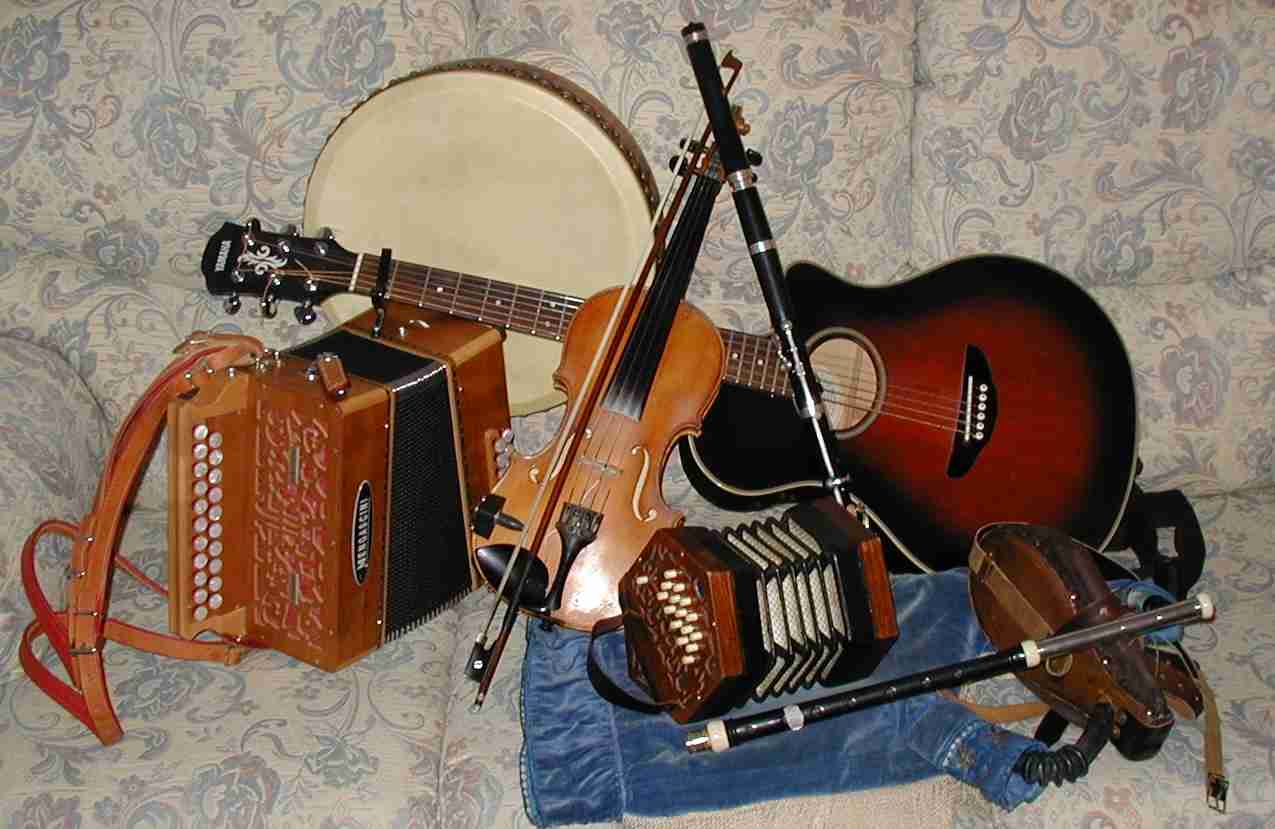
From left to right: Button Accordion, Bodhran, Fiddle,
Concertina, Guitar, Flute, and Uilleann Pipes.
As I listen to Ronan Hardiman's: Michael Flatley's Lord of the Dance soundtrack from the actual production, I think about my family. I haven't seen anyone in my immediate family for a few years now. Listening to this music, reminds me of my grandma who took me to the show. Her birthday was today and for some reason I feel her presence all around me. It's like she never left. In fact, she just moved closer to where I live. I remember watching the Lord of the Dance with her and afterwards, we hailed the attention of the Irish dancers (especially, the gorgeous male lead). They were friendly and we told them how great the show was. They offered their 'thanks' and went toward their hotel rooms. I've been listening to the CD ever since and I can't get enough of the lively feeling I get from all the instruments. It inspires me to live happier, to lapse back into time and imagine a peaceful world.

Ireland is rich in literature that understands a soul's yearnings, and dancing that understands a happy heart. 
– Margaret Jackson


In my novel, To Love An Irishman, one of the main things that bring the couple together is Celtic music. The ceili, or group of musicians--traditionally, up to ten (called a band) who specialized in creating music for dancers--arrive and Ciaran cannot wait to show Aveline how to do an Irish jig. Drums, fiddles, flutes, and pipes are what they're most known for. Some modern bands now include guitar, piano, saxophone, snare drum with woodblock, double bass, piccolo, and even banjos. These bands gained wide popularity during the 1950s/60s. Ceili bands gain promotion through competitions and festivals still going on today.


If I ever get to visit Ireland, I intend to embrace the Celtic folk music scene.


Music helps me write by:
--Setting the mood, tone, or scene of my novel.
--Opening my mind to more creativity.
--Taking me away to a different time and place where all anyone had to tell a story with was an instrument and a voice.


Do you have a passion for music? What kind of music inspires you to write? Feel free to leave a comment below. Thank you for reading!


Happy writing!
Diva J.
Image and video hosting by TinyPic

  • Digg
  • Del.icio.us
  • StumbleUpon
  • Reddit
  • RSS

The Middle Of The Book Blues

If you've ever finished a manuscript, you know what I'm talking about. Of course, once you are past the middle it's almost smooth sailing. I think beginnings and middles are the hardest parts to write because so much rides upon these scenes. The beginning is what readers/editors see first. It is what grabs their attention. Middles can also make or break your book. Its the part in the story where your hero/heroine must make an important choice or is a turning point for the plot in the novel.

When we get to this point, sometimes the story may sag a bit and we lose focus on where our characters are headed. Don't give up, though. When I get stuck in the dreaded middle, I start working on the structure of my work in progress. If I make the plot go this way, then how will it affect my characters?

I've learned a new technique for making sure the characters' background is revealed during the turning points in the novel.

Karen's Tips:
1. Count the number of pages you have, or "projected" pages you should have if you aren't finished with the book. Remember that certain genres have specific word counts. Let's say Regency Romance has a general word count of 70,000. To find out how many manuscript pages that is divide 70,000 by 250 words per double space page. This is about 280 manuscript pages.


2. Divide the page number by four. (280 divided by four equals 70.)


3. Mark off your pages by that number into three parts. In a 280 page book, mark pages 70, 140, and 210.


4. Within those chapters should be a turning point for one or both of your main characters. They must make a decision, or come to some kind of conclusion. In the rest of the chapter or chapter after that, one or both must then take some action because of that decision or conclusion.

Usually if you are stuck on a certain passage in the work in progress, then it means you either don't know or haven't decided what that crucial decision or conclusion your character has made or will make in that scene.


Ask these questions to learn more:
-Look at the scenes individually: What decision does the hero and/or heroine have to make here?
-How will that decision/conclusion make the hero and/or heroine act?
-How will that action move one or both of them to the next major decision point?
- At the middle of your book: In what way will this decision get them in trouble by the third turning point or "dark moment"?
-Have I included enough background and history to give my reader a good idea why my character (s) have to make their decision?
-Does their thoughts and emotions reflect this decision?


Next time, when you hit the middle of the book blues, you'll be prepared. Thank you so much for reading. Do you have any tips on overcoming writer's block? Please share in a comment below.


Happy writing!
Diva J.

Image and video hosting by TinyPic

  • Digg
  • Del.icio.us
  • StumbleUpon
  • Reddit
  • RSS

Revision Is The Pleasure of Writing

As I write this blog, I will officially be halfway through writing my work in progress (the unofficially named The Earl's Son). I've been working steadily for almost 6 months on this novel and this is a big accomplishment. Of course, after I hit the 45,000 word mark, I could stop, but I think this might be a 60-70,000 word book. It's predecessor was over 70,000. There is something about large books that fascinates me. Maybe because they take so much longer to read. In my spare time, I've been reading 200-page Regency romance books that I bought for cheap at the flea market, due to their out-of-date nature. I love them to death, but I could read one in two days (not reading all day mind you). Even if I loved the story so much, I wouldn't be completely satisfied. That is why most authors write series. So they could have a shorter story in multiple volumes. I'm used to reading Stephen King. Although, I don't have enough ideas to fill 1,000-pages worth, I really enjoyed the story better when it took me longer to finish.

One such work is from Lavyrle Spencer called "November of the Heart". I read this book over 5 years ago without a literary standpoint, and the story line pulled me in. When I reread it this week, I realized the author used omniscient POV (Oh, no!), head-hopped, and used more dialogue than tags--you know, the she said, he said action bits. Despite these overlooked errors, I absorbed the book's wonderful story line, plot, and character development that inspired my early work so long ago. Pretty Lorna Barnett grew into a lady before our eyes, and handsome Norwegian boat builder Jens Harken showed her what was most important in life...love and family...despite their different social statuses. I felt satisfied when I closed the book and this is ALL that matters to me. Of course, part of the upstairs/downstairs romance plot is you never know if the h/H will have a HEA. I love these types...

I apologize reader, if I got carried away...you get my drift though, right? :)

As I get closer and closer to finishing the first draft, I start planning my revision process. I will admit, it's not my favorite part, but it's a crucial part of the creation process. You might even find pleasure in it. Here are some tips I've found that will help me along the way:

1) Plan your revisions before you finish writing the book. Some people make a list, while others use sticky notes to go through each scene and do the necessary repairs. I use index cards where I write the name of each chapter, which point of view the chapter is in, who the main characters are, what the setting is, then I list and describe the plot(s), list the key information, and lastly, I write how many pages the chapter is. This can be done before or after your novel is complete. Of course, if you wait until after you'll have all the chapters written already!

2) Once the book is complete, wait a couple weeks before reading it, again. The old adage 'time makes the heart grow fonder' is so true. We may love our work now, but once we forget what we wrote (focus on another project or occupy your mind elsewhere), we look at the work with a whole new and different perspective. You'll want to go over the story several times afterwards.

3) In the first draft, focus on grammar and spelling correction. We must spot what is easily seen before we delve much deeper into the story and really understand the meaning. Missing commas, misspelled words, etc., could stop any further revision in its tracks.

4) In the second draft, go over the plot/conflict/dialogue/theme. Some people use the sticky notes, lists, or index cards for this exercise. I place each index card in order and if something is out of place I'd move them around until they made complete sense with the story, then I make the changes in my draft. I've heard some authors make a storyboard, where their lists are expanded to display more information like character information, including their thoughts, feelings, etc., and the author would reorganize this as well. Usually to combat this, the plot description I write on the card includes the main character's feelings, thoughts, and dialogue to reflect what happens around him or her.

5) In the third draft, cut unnecessary words and sentences. According to "On Writing", Stephen King tells the writer to cut 10% from their finished project. You may wonder, why so much?, but some people say you should cut more. The reason being, if you have a large work, most of what you include is probably not needed. Unless every word you write furthers the plot, at least try to tighten some of your work. When I say "tighten" I mean condense. When you evaluate your re-worked scenes, there are questions to ask yourself like: Would this bore the reader? If yes, cut it! Does this scene further the plot, up the stakes for the characters, or provide conflict? If no, cut it! Finding the right questions to ask is the easy part, choosing what to cut on the other hand could make even the most stoic writer shed tears. If you get rid of a sentence or line you hold dear, paste it into another word document to reformat for use in another story. You'd never know it belonged until you tried!

As you can see, even YOU can revise a novel. If you have any more tips or tricks, I'd love to hear them. Just leave a comment below. Oh, and don't forget to subscribe if you haven't already!


Happy writing!
Diva J.

Image and video hosting by TinyPic

  • Digg
  • Del.icio.us
  • StumbleUpon
  • Reddit
  • RSS

To Be Or Not To Be Continued...

Since we all read last week how I write with passion, now you have a chance to learn how I add spice to my novel.  Yes, I call suspense/conflict the flavor ingredients, because they are integral parts of your book's recipe. We all know the four parts of a book: The set-up, the response, the attack (I call it rising action!), and the resolution. For movies with three acts, the response and the attack are combined, and this second act is called the confrontation. (You could read more about this on Storyfix.)

I love reading and learning my craft. Writing romance is so exhilarating, but sometimes I like to research another genre so I could improve my own writing and add a little flavor. I think when you look outside the box, you experience another perspective you might not have noticed before. In my most recent works, you'll notice how I sprinkle just enough suspense in to keep my readers interested.

Here are 5 ways you can add suspense in your novel:

Probably one of the most iconic suspense tactics.
1) Use time to your advantage. When I say time, I'm not talking about how long it takes you to write. What I mean is utilize the time in the story for the benefit of the reader. A protagonist shouldn't succeed at his goal in the specific time-frame you gave him, because if he did accomplish the goal, the story would be over. In my work in progress, The Earl's Son, Lord William has less than 24 hours to reach London in order to get his son back from his captor. If he achieved that goal in the beginning of the book, I would have to come up with something else to keep the reader interested. Which means more work for the writer. Just let the story work for you instead. That makes more sense, right?
2) Raise the stakes and keep them high. Life gives us good/bad consequences no matter if we make wrong or right decisions. This also works for your hero/heroine. Without a crisis, or something causing them not to reach their goal, our books would be boring indeed. This is one of my favorite ways to add suspense, because in a way you as the writer are calling the shots. In my novel, there is a carriage crash, a fist-fight, a carriage chase, and a shooting to name a few instances where the tension is raised, but the plot is slowed down when this happens thus causing a complication. Don't hold back on your writing, readers could tell the difference.
3) Include many complications. I know stakes could count as complications, but don't confuse them with the pointy, wooden weapons we use on vampires! Use your antagonist to the greatest advantage. Not only is time against your hero/heroine, but the choices he or she made can create a dilemma. Ex: Alex grinned. All talk, no play, makes the bandits run away. Now that he was free and the woman was favorably shaken, he had two options: Escape, or free her from her controlling brother. From this example we see my hero has a complication. Whether he truly cares about the woman he wanted to free or not, his choice is not going to be easy, because he still has "her controlling brother" (the villain) to overcome first.  
4) Create a memorable villain. Don't make your villain so awful that you'd want him to die off in the first or second chapter. At least, not yet. Drinking, gambling, and bedding wenches is a very mediocre way of describing him in a way where you are disgusted in his habits, but he is worth keeping around. Of course, other genres have different ways of showing their antagonist. Mysteries use a transparent villain to hide who they are until later, while an actual suspense wants you to know who he is right now. I think romance tends to mix the two or at least use either to the greatest advantage in the novel. No matter what you do with the villain, he has to be a worthy enough contender against the hero/heroine. In my work in progress, you find out fairly soon that the antagonist, Oliver Attwood, is the heroine's brother and has a firm dislike for the hero's family. These are givens. Although you know his ties with the hero/heroine, this does not set him apart from anyone else. You learn his intelligence and motivation later on. This makes him memorable. (Don't worry, women can be villains, too!)  
5) Create a memorable hero/heroine. Make sure he or she is believable. Their cause has to be just or at least redeemable by the end of the story. I try to make my characters as real as possible. Every one experiences death in their life, some lost love or heartbreak, and others have a pension for not experiencing the best childhood. Not everyone is born to fame nor walked through life without facing problems. As compassionate human beings, we tend to feel more sorry for those with hurdles to cross over than those who have it easy. After all, they reflect ourselves. My protagonist(s) inadvertently reflect me. From my work in progress, the heroine's, Rosalind's, past is filled with painful memories of loss. She needs to accept the choices she's made, put away her prejudices against men and the aristocracy, and move on with her life. I'm sure we all hope she'll fall in love with Alex and live happily ever after! But that is another given. What really matters is if she overcomes her problems and grows as a person, right?

Most readers care about the characters' journeys above all. We know a romance will end with a happy ending, we know the villain in a mystery will be discovered at the end, etc. The most important part of a story is how they got there.

Of course, mystery and suspense writers will give you more ways and an even broader insight into suspense, because that is what they thrive upon, but these are the ways I incorporate conflict into my romance. Many of the examples I give you are from my current work in progress, The Earl's Son. You may think I'm giving away pertinent information about the plot, but what I'm actually doing is showing you the spices I use for my recipe, not the main ingredients. ^_~ For more suspense topics not covered here and to read someone else's perspective, please visit: Writers Digest: 9 Tricks To Writing Suspense

When you think you can't, you can. When you think you can, you will. Never give up!
Do you use conflict/suspense in your novels? If so, please feel free to share some of your tips with the rest of us. I do love learning new tricks of the trade. :)


Happy writing!
Diva J.
Image and video hosting by TinyPic

  • Digg
  • Del.icio.us
  • StumbleUpon
  • Reddit
  • RSS