Powered by Blogger.
RSS
Showing posts with label author. Show all posts

Fall In Love Again Giveaway Winners and More!!!

So, this is the last day of National Novel Writer's Month and I feel very far from a novelist at this time. I haven't written a single word since November 3rd. Luckily, next month I will hopefully have some "extra" time to do what I love so much.

It's like trying to blow up a balloon
with the weight of three books on top.
I admit that I fell to the pressures of everyday life and stopped writing for a month. Technically, I did write everyday, it just consisted of essays and papers. Maybe I'm not driven enough or I've lost my perseverance to get through anything. I know this isn't true, but it is what it feels like. But books aren't going to write themselves and no one else can write what you have in your head.The main reason why I prevented myself from succeeding this month is because I'm a firm believer of creating your best work first and pursuing publishing later. I'm not saying my first drafts are perfect, but I spend the time necessary on them. Even if I write one book a year, at least I'm accomplishing something. I'm happy for the time I do have right now and the over 2000 words I already have in the latest manuscript. :)

I'll be back in the game soon, I promise.

Some quick news:
--Once I get this new Victorian series rolling, I'm changing my name to a pen name to keep my anonymity. So, keep a look out for my new look.
--Last but not least, my fiance and I are already saving money for our wedding next year!

Thank you so much for sticking with me throughout everything, readers. I couldn't ask for better friends.

The winners for my Fall In Love Giveaway Hop have already been notified. I enjoyed reading and responding to every comment. You are all the best!!!!

a Rafflecopter giveaway

Happy writing!
Diva J.
Image and video hosting by TinyPic

  • Digg
  • Del.icio.us
  • StumbleUpon
  • Reddit
  • RSS

Confessions of a 20-Something Author: Part 4

Everyone has felt the bite of rejection. It stings for a while and sometimes it's really hard to get over. Luckily, I'm not about to go into the best rejection letter I've ever received, because I've already been there and done that on my post called "Exits and Entrances".

The real reason why I made this four-part series in the first place is to tell everyone about my successes, not my failures. How I've overcome the hurdles in my (short, to some) life and came to where I am today.

No, I'm not a bestseller, but I'm published.
No, I don't make six figures a year, but I'm rich in creativity.

I hope you listen to my words and gain inspiration to find happiness in your life. This is my ultimate goal. I think this is my calling. The only way I can truly help others. Even though I'm currently on a hiatus from writing, I can still encourage other people to make their dreams come true. I've mentioned how you could overcome other people's expectations, how writing can take you away from the stress of everyday life, and how time could affect your creativity. Now, it's time to overcome your own fears and reach your greatest potential.

Yes, it hurts when the people closest to you doubt your ability to reach success, but when you doubt yourself the possible becomes impossible.

In 2008 or 2009 I asked my only friend on the planet to beta read my first book before it became self-published. I sent her the whole novel through email. A couple months went by and I didn't receive a single reply. I wrote her again and she said she was so busy that she couldn't get past the first chapter. The whole time I'm thinking, she must have hated it completely. This friend was an avid reader. She is the person who let me borrow "A Rose In Winter" by Kathleen E. Woodiwiss and hooked me on romance. Why would she let me down when I'm trying to become one of those authors she adores?

Let's just say it hurt. I got so emotional about it, I published the book without making sure it was the best it could be. I wanted my estranged family to read it. I wanted my coworkers to read it. I wanted the world to read it. I think it was a cry for attention or at least notice, because after they'd read it I asked for input/reviews, etc. Most of it was positive. They wanted me to write a sequel. Do you want to know why they felt this way? Because I knew them. They cared about my feelings. It became a personal reaction, not an unbiased assessment of my work. Of course, years later, I see every single flaw in that novel and it irks me to know I let this reach so many hands. I'm ashamed, rather.

Then I read the newest book on the bestseller's list and wonder why I can't write like they do. Why hadn't my published book get placed on the list? Maybe I hadn't done as much marketing/promotion as I could have. There are things that I could've done, but so many more things I could be doing.

The fact of the matter is there are things that are in my control and there are things that are beyond my control. Right now, I still write everyday, whether schoolwork or a blog or even a comment. I learn as much about the craft as I can and I take these skills to my own writing to improve the quality. This is all I can do for right now. Until I have a large outreach, this is all I have to do. What I can't do is force people to buy my book and expect readers to find me themselves. Writing is amazing, but it's a career for a reason. You have to build yourself to the top like everything else in life worth having.

So, you wanted the recipe for success? Well, here you go. Never give up, never surrender. Thanks so much for reading. I appreciate every single one of you!


Happy writing!
Diva J.
Image and video hosting by TinyPic

  • Digg
  • Del.icio.us
  • StumbleUpon
  • Reddit
  • RSS

Confessions of a 20-Something Author: Part 3

Today, I'm continuing my 4-part series about love, life, and the pursuit of writing. :)

With midterms on the horizon, I haven't much time to do anything. Every time I think there is a silver-lining in the clouds, they turn dark with rain again. I've almost finished writing an outline for my new story and I'm working on the series bible, which takes a lot of thought. One thing I do know for sure, I think this will be my first and only year of college. I think it's become one of those dreams that have turned sour. After so many years of failed attempts to go, I see now why it wouldn't have been possible as I got older. Too many changes have occurred in my life. I have a sure path now...

Why should I attempt to change what I cannot? I already write for a...living. If you can call it 'meager' without sounding harsh, than so be it. I haven't written in almost a month. And I know exactly why.

College has become my hobby now. I probably take the day job and writing more seriously, though. Actually, if I had my way, I'd take writing and college seriously and not even have a day job. But like Cinderella says "a dream is a wish your heart makes when you're all alone."

Truth be known, the confession I have for today is that, I play video games in my spare time. I'm not talking about Facebook flash games either (although, I did spend a good amount of time on there, too). No, these are Xbox 360 games/console games with controllers and headsets. Although, I've been known to spend hours on these past times, every time I do, I feel like I've wasted time I could be working. Does this make me a workaholic?

If I sit and do classwork, or writing, everyday, I would be miserable. Since I can't afford to go anywhere (unless I don't want to think of a savings account) I have plenty enough entertainment outlets around the apartment. In fact, 4 of my favorite shows have started another season. Of course, I want to watch them.

Sometimes, when I've finished all my schoolwork and I have a day off, I sit on my computer with nothing to write about. Well, let me rephrase that, because there is always plenty of ideas to write about, just not enough inspiration/motivation to get it all out. Like the image says: my brain is so fried that I just waste time online. This was a major reason why I deactivated my Facebook account. Those games are so addicting!

Yes, I can't sleep at night, because my mind goes a million miles an hour worrying if my characters' stories will ever be told. Yes, I daydream at work about other peoples' lives. Yes, I open Word on my computer to write and not a single sentence comes out of me. Yes, I'm human. These things happen. "Life happens to you while you're busy making other plans." (John Lennon) You can't just sit around and expect greatness...you have to work toward it. Luckily, dreams are attainable and they do come true.

Anyways, I will leave you with a final note: Recently, I read an article about writing the best you can, instead of falling under the pressure of making a word count everyday.

Your characters and readers will love you more for taking the time on your work, then rushing through it.

As always, thank you so much for reading my posts. I hope you have gained motivation and insight as your journey continues. You can't put your life on hold for your dreams, but you can at least enjoy it. Please feel free to leave a comment with how you make the time for your writing. :)


Happy writing!
Diva J.
Image and video hosting by TinyPic

  • Digg
  • Del.icio.us
  • StumbleUpon
  • Reddit
  • RSS

Naughty or Nice Giveaway Hop!!!

nautghy or nice
The Naughty or Nice Giveaway Hop was organized by Nat @ Reading Romances!

I wanted to thank everyone for stopping by and participating in my contest. For all those who've stuck with me and supported me since the release of my debut book, I salute you.

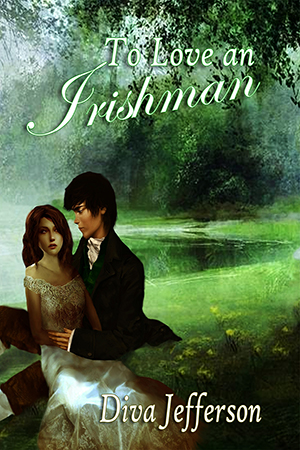
As you all know, my book To Love An Irishman is nice. Although, there is a naughty bit at the end. :P

What makes a book nice? In my opinion:
--A specific (low) number of love scenes.
--Romantic dialogue.
--The hero/heroine doesn't make brash decisions that lead to harming others.
--The villain isn't ruthless.
--The ending is happy.

Of course, your definition may differ and I would love to hear it. :)

She is left with an offer she cannot refuse...
Upon his death in 1823, English nobleman, Lord Peyton leaves his daughter Lady Aveline with two choices—stay single and inherit only a small farm in Ireland, where she might just be able to eke out a living, or get married and live in luxury, inheriting all his wealth and property. Fiercely independent, Aveline heads for Ireland only to run afoul of her father’s farm manager, the devastatingly handsome Ciaran O’'Devlin. Alone in a strange country, Aveline yearns for love and friendship, but Ciaran offers only criticism and disdain. Confused and angered by strange visions and her growing attraction to Ciaran, Aveline is determined to make the farm prosper—despite the insufferable Irishman.

He has a secret he cannot reveal...
Ciaran mistrusts Aveline’s intentions and refuses to admit that a willful, English woman now owns the farm that should have been his. Although he insists Aveline should go back to England, he cannot deny their budding passion. Yet, he knows—even if she doesn’t—that nothing will come of it. Not only can’t a poor Irishman marry an English noblewoman, but when Aveline learns of his past, she’ll want nothing more to do with him. Ciaran has always known that each decision carries a consequence, but it’s only when he stands to lose Aveline that he realizes what a heavy price his past decisions may have.

What you can win here: An e book copy of To Love An Irishman.
Number of winners: 1
Open to (INT, US or US/CAN): INT
How to enter: Just enter through the Rafflecopter below. :)
a Rafflecopter giveaway

Hop and enter the other giveaways!


Happy writing!
Diva J.
Image and video hosting by TinyPic

  • Digg
  • Del.icio.us
  • StumbleUpon
  • Reddit
  • RSS

Finding Your Novel's Happily Ever After


Dear Readers, I apologize for the lack of a blog post last week. I was so pressed for time, I couldn't get myself to think of a topic to write about. Anyways, I'm on the last few thousands words on my work in progress, and I must say the journey through this book has been a very enlightening one. My characters have shown me a lot about themselves I never knew before. I can't wait to write more about them. I used to be so good at endings. In fact, I'd write the ending first, then write from there, but with The Earl's Son, I tried something different.

I will admit I did have an ending planned for the book all along, but I knew it would come about way differently than I anticipated. Of course, it wouldn't be a Victorian romance novel without the happily ever after!


Every book deserves to have a perfect ending.

Here are the different types of HEA endings:
-The hero/heroine gets what they desired and ends up happy.
-The hero/heroine does not get what they desired, but something better, and is happy about it anyway.
-The hero/heroine finds his/her original goals were flawed and changes for the better as a result, thus ending up happy in the end.

Unacceptable HEA endings:
-An unknown character shows up to save the day.
-An unknown conflict occurs that only enhances the conflict of the story.
-You keep the story going past an implied ending. 
-You end a single title romance with a cliffhanger.

Your HEAs may be different than mine, but I hope you get the idea.

Here are some tips on writing the perfect ending:
1. Satisfy the reader. Make sure the good guy wins and the bad guy loses.
2. Tie up all loose ends. The main plot and all sub plots should be resolved. (Sometimes you could tweak this step for books in a series.) Your hero/heroine should also solve their own problems.
3. Make the ending flow with the rest of the book. The hero isn't going to walk away from the heroine at the end if he had spent the whole book chasing after her. Also, the ending should be obvious from the information given throughout the novel.
4. Match the ending's emotion with the beginning and middle. It's not fair to your readers to send them on such a wonderful adventure only to crash their plane at the end. This won't encourage them to buy anymore of your books.
5. Your reader should feel the same emotions as your hero/heroine. If they can't envision your character's happy thoughts and feelings at the end of a novel, you haven't fully developed your character's personalities, and you should address this ASAP.
6. Finish with a strong sentence. This sentence should be just as powerful as the one you started the whole story with. It could reflect your story's theme, explain the title, or you could restate the first line.

(For more information, please read: How To Write The End of A Novel by C. Patrick Schulze and Keys To A Great Ending by Crista Rucker.)

Thank you so much for reading. Next week, on Thursday, I'll be participating in the 18 And Over Giveaway Hop. I'll see you then. 
One last thing before I go: Do you have any tips on writing the perfect ending? Please feel free to post your response in a comment  (and subscribe if you haven't already done so) below.


Happy writing!
Diva J.
Image and video hosting by TinyPic

  • Digg
  • Del.icio.us
  • StumbleUpon
  • Reddit
  • RSS

There Are A Lot Of Writers, But...


Have you ever had a long week? Where no matter what you do you can't get anything done? Or, so it seems. Class starts next week and I'm pulling hair out trying to finish my work in progress, The Earl's Son, and an editing project for a client. Who thought writing a love scene would be so hard to do? Especially when it makes or breaks your character's relationship with each other. This is why I put them near the end. It's almost like a finale. You know, when all the fireworks go off at once during the Fourth of July celebration and lots of pretty colors appear at once. To me, this is how those love scenes reflect on the paper. In a romance, they are the character's right of passage. Of course, sometimes they start the problems, not end them. I think a good balance is in order when this happens. Stronger relationships on all levels lead the reader to a much more fulfilling HEA.


<----We all feel like this sometime. Am I right?

Anyways, I've got lots of ideas in my head and I'm experimenting with several at a time to see what works and what doesn't. Writing isn't something you do overnight. It takes time like everything else important in your life.When you find yourself at the lowest of the lows and completely at a loss for words, just remember one thing:

There are a lot of writers, but only one YOU.

Yes, it's true. No one can write like you do, no one can create worlds in the same way.

Never give up. Never surrender.
Your readers are counting on you.

Thank you for all of your support! I really appreciate it. :)


Happy writing!
Diva J.
Image and video hosting by TinyPic

  • Digg
  • Del.icio.us
  • StumbleUpon
  • Reddit
  • RSS

Blog Hop: What Do You Look For In A Review?

review

What do you look for in a review?

I love all reviews from my readers. Just supporting me through buying my book is wonderful. My favorite reviews are ones where the reader highlights their favorite parts of the book. Their likes and dislikes (if applicable) are important to me. I could use this input in making decisions in my future novels. If everyone loved the description about Ireland in To Love An Irishman, then I'll try to add more details in my current work in progress.

By all means, if something about the book is not working for you, don't be afraid to tell the author. 
Authors grow with experience.

I'd like to see less references to grammar/spelling and more input catered to content/structure. I've read many reviews where the reader just wanted to let the author know the story contained lots of errors, but said nothing about the story, plot, anything else.

Reviews are very important for authors. They provide unbiased feedback on the piece from someone who is not acquainted with the writer. This input influences future works and can help authors strengthen their voice. 

If you have anything to say about a book, please leave a review for the author on a website where it's available for purchase. (Publisher's site, Amazon, Smashwords, Goodreads, etc.)


In lieu of this post, I'm giving away a copy of To Love An Irishman in hopes *crosses fingers* that whoever wins will offer to write a review for me on a website of their choosing. :) (Please leave your email address in a comment to participate. Winners will be announced on Tuesday!)


Thank you so much for reading!
Feel free to visit the other blogs on this hop to show your support! :)


Happy writing!
Diva J.
Image and video hosting by TinyPic

  • Digg
  • Del.icio.us
  • StumbleUpon
  • Reddit
  • RSS

The Best Writing Advice I'd Ever Received

Dear readers,
I'm on the home stretch for completing this novel and I'm so excited to announce that it will be part of a series or saga. I much prefer the term 'saga', because it sounds more epic. The problem is I can't seem to come up with a series name yet. (I'll address those concerns later on in the post.) Although, I do have several other books in mind for the saga, The Earl's Son is actually a sequel to another book I wrote years ago.

This Victorian Era saga is about an aristocratic family who are victims of political strife. There is action, suspense, revenge, mystery, deception and above all, romance. I hope you enjoy the novels as much as I do writing them.

My theme for this post is: What is the best writing advice you've ever received?
Believe it or not, after years of talking to other writers, joining workshops workshops, and participating in a critique group, I've heard a lot of great advice on writing. One such recommendation came from none other than my fiance who reads a lot of Fantasy (Jim Butcher, Tracey Hickman/Margaret Wies, etc.) Our relationship involves a lot of conversation and despite his inexperience in my genre, I read him what I've written for the day in hopes to receive an opinion that sticks. So often he'd repeated a phrase which never left my mind. I think about it a lot when I write.

The words I remember most from him were...
Don't underestimate your readers.

It's true. Readers know more than they admit. Of course, a writer could give a whole history lesson on farming (like I did in To Love An Irishman), but it's really hard to avoid describing things that are relevant for a topic without thinking your reader will find the content boring. In my current project, I have several fight scenes where I describe my hero using martial art styles. You'd think most women reading romance novels wouldn't know the actual names of these moves...so, I describe the process. My fiance encouraged me to be more descriptive and hold less back in my writing.

Don't be afraid to open up to your readers. After all, they want the whole experience your novel gives them.
Including, the parts you think are boring.
Description and details go along way. Use them to your advantage.


Please feel free to share your advice in a comment below. Oh, and if you also have recommendations for naming a series or saga, then share those, too. Thank you for reading!


Happy writing!
Diva J.
Image and video hosting by TinyPic

  • Digg
  • Del.icio.us
  • StumbleUpon
  • Reddit
  • RSS

Writing and Music Are Acts of Love

When I feel unmotivated, I turn to music. When everything in the world seems to go wrong, I put in my favorite CD and let the melody show me the magic in the air. Although, I'm a very big fan of punk rock, specifically alternative, I listen to more and more instrumental lately. Of course, my guilty pleasure is Celtic music.

Today, I needed an intervention. I awoke early and for some reason couldn't move myself into action. I had emails piling up, content to write and other miscellaneous tasks to perform, including the creation of this blog.

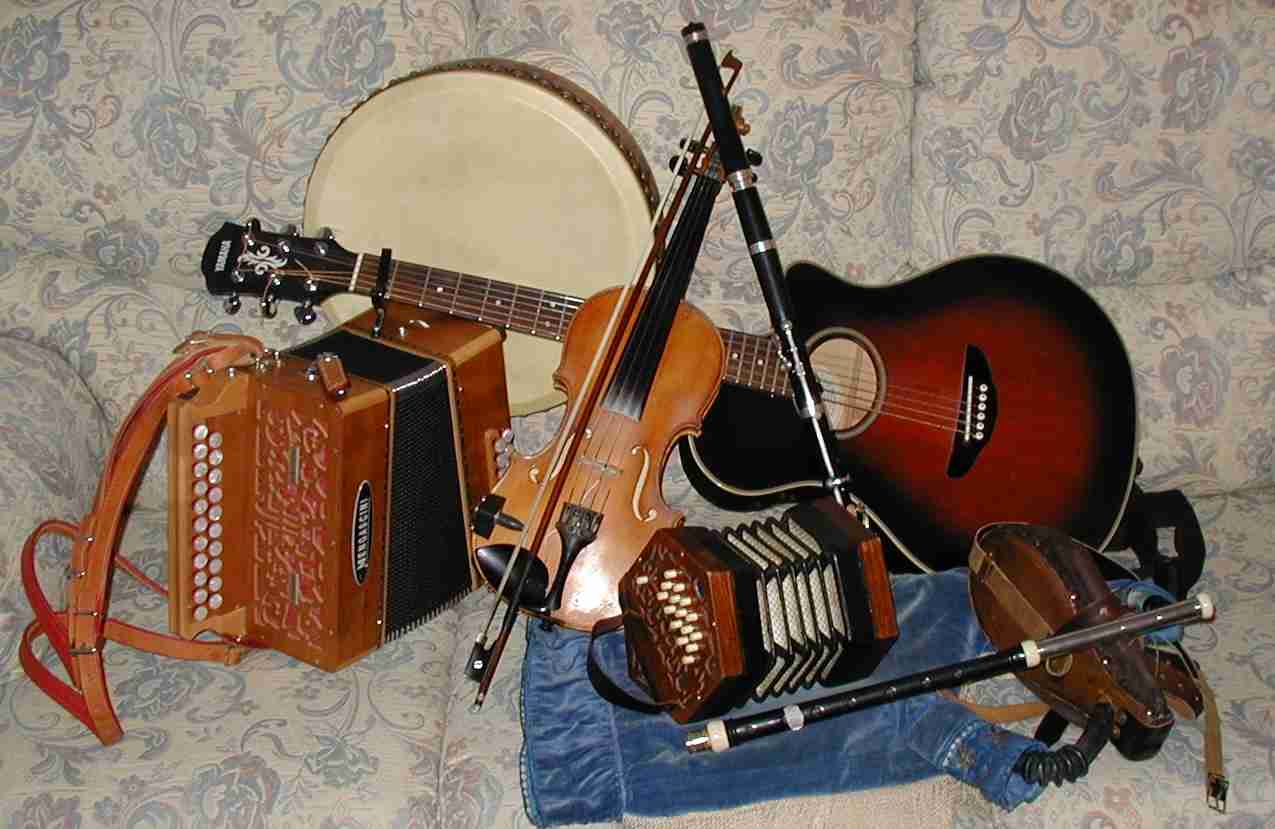
From left to right: Button Accordion, Bodhran, Fiddle,
Concertina, Guitar, Flute, and Uilleann Pipes.
As I listen to Ronan Hardiman's: Michael Flatley's Lord of the Dance soundtrack from the actual production, I think about my family. I haven't seen anyone in my immediate family for a few years now. Listening to this music, reminds me of my grandma who took me to the show. Her birthday was today and for some reason I feel her presence all around me. It's like she never left. In fact, she just moved closer to where I live. I remember watching the Lord of the Dance with her and afterwards, we hailed the attention of the Irish dancers (especially, the gorgeous male lead). They were friendly and we told them how great the show was. They offered their 'thanks' and went toward their hotel rooms. I've been listening to the CD ever since and I can't get enough of the lively feeling I get from all the instruments. It inspires me to live happier, to lapse back into time and imagine a peaceful world.

Ireland is rich in literature that understands a soul's yearnings, and dancing that understands a happy heart. 
– Margaret Jackson


In my novel, To Love An Irishman, one of the main things that bring the couple together is Celtic music. The ceili, or group of musicians--traditionally, up to ten (called a band) who specialized in creating music for dancers--arrive and Ciaran cannot wait to show Aveline how to do an Irish jig. Drums, fiddles, flutes, and pipes are what they're most known for. Some modern bands now include guitar, piano, saxophone, snare drum with woodblock, double bass, piccolo, and even banjos. These bands gained wide popularity during the 1950s/60s. Ceili bands gain promotion through competitions and festivals still going on today.


If I ever get to visit Ireland, I intend to embrace the Celtic folk music scene.


Music helps me write by:
--Setting the mood, tone, or scene of my novel.
--Opening my mind to more creativity.
--Taking me away to a different time and place where all anyone had to tell a story with was an instrument and a voice.


Do you have a passion for music? What kind of music inspires you to write? Feel free to leave a comment below. Thank you for reading!


Happy writing!
Diva J.
Image and video hosting by TinyPic

  • Digg
  • Del.icio.us
  • StumbleUpon
  • Reddit
  • RSS

Life Lessons Learned From Cats

My mascot, Muffin.
Hello, readers! As you all know it's Friday the 13th. This is a happy day for me. Although, I never figured out why, there seems to be something in the air that makes me smile despite anything. For fun, I've decided to evaluate my cat's actions and justify them into short lessons I've learned from life. I'm not one of those people who consider their pet one of their children. Muffin is my best friend and lady's companion, if you will.

For those who are interested, Muffin (pictured at left) is my 5 year old tailless rescue kitty. She is very sweet and generally a very happy cat no matter what. I envy her attitude towards life sometimes.

Here are Muffin's life lessons:
1) Don't sweat the small stuff.
Like every good pet owner, I take her to the vet. She hates her black carrier so much I have to trick her to get into it. Luckily, after the horrible experience is over with, she'll get out and not look at me for a couple hours. Then when it comes down to feeding time, she won't ignore me anymore. I realized that despite everything she goes through (whether she likes it or not), is just a small hurdle in her life. No matter how upset my cat gets at me--through dirty looks or otherwise--she is over it within 24 hours. Some people hold grudges for years. We seem to hover in the past and continue to blame the same people over and over for our mistakes. When something stressful happens, we tend to lose sight of what is good in our lives. We don't see what really matters. No matter how mad Muffin is, she knows I'm the one who cares for her. And that is the most important thing.

2) Always dream bigger than you are.
Muffin is a certified window kitty. What cat isn't? Humans get to leave the small home world for something most cats never truly understand. The outdoors. We must realize that animals think differently than us. The world may be big to us, but to them, the neighborhood (or yard) is a dream. All they want is to chase birds and squirrels in the grass. Fortunately as humans, we know there is more to the outdoors than a few birds. There are cars, beaches, skyscrapers, and mountains. Since we see these things everyday, they don't seem like a big deal to us at all. When you start a project in hopes it will become successful, broaden your horizons. You are but a speck in the universe, and at the same time you are unique. Use this knowledge for your own purpose. No one can write like you can, no one can dream like you can. Reach new audiences.

3) Never give up.
This is one of my favorite life lessons. My cat likes to rub my legs or "meow" when she is hungry. No new information there. Well, if I don't pay attention to her...she will do it again. This is probably one of the most prolific examples of a cat's propensity never to quit. Of course hunger plays a big factor in it, but what about when Muffin tries to jump onto her cat tree and falls. She doesn't walk away, she tries again. Rejection should never be an excuse to give up on what you love doing. Find something that motivates you enough to keep trying.

4) Always look at the world through curious eyes.
Unlike some animals, we take things for granted. Every time I've moved with Muffin (about 4 or 5 times) she's explored the whole house/apartment with her nose. She wanted to know every nook and cranny, every hidden corner. She is the epitome of nosy, but she is the only one who knows exactly what she looks for. Don't be afraid to question yourself or others. Sometimes, knowing the whole truth about something/someone can mean everything. If I don't know something, I'll ask. I'd rather be informed then misinformed. Wouldn't you?

5) Love unconditionally.
Muffin, well more like pets in general, love their owners unconditionally. When you choose to fall in love or care about someone, do it without conditions. Race, sex, height, length, weight, etc. don't really matter in the long run. When it comes down to it, the only thing that matters is whether the love is returned or not. We don't judge the animals we love, why should we judge the people?


I know this post wasn't writing-related, but I think these life lessons are good to know. We could all use them on our writing journey. Do you live with a dog, ferret, hamster, etc.? I'd love to know your learned lessons. Please feel free to provide input in a comment below and subscribe if you haven't already!


Happy writing!
Diva J.
Image and video hosting by TinyPic

  • Digg
  • Del.icio.us
  • StumbleUpon
  • Reddit
  • RSS

Revision Is The Pleasure of Writing

As I write this blog, I will officially be halfway through writing my work in progress (the unofficially named The Earl's Son). I've been working steadily for almost 6 months on this novel and this is a big accomplishment. Of course, after I hit the 45,000 word mark, I could stop, but I think this might be a 60-70,000 word book. It's predecessor was over 70,000. There is something about large books that fascinates me. Maybe because they take so much longer to read. In my spare time, I've been reading 200-page Regency romance books that I bought for cheap at the flea market, due to their out-of-date nature. I love them to death, but I could read one in two days (not reading all day mind you). Even if I loved the story so much, I wouldn't be completely satisfied. That is why most authors write series. So they could have a shorter story in multiple volumes. I'm used to reading Stephen King. Although, I don't have enough ideas to fill 1,000-pages worth, I really enjoyed the story better when it took me longer to finish.

One such work is from Lavyrle Spencer called "November of the Heart". I read this book over 5 years ago without a literary standpoint, and the story line pulled me in. When I reread it this week, I realized the author used omniscient POV (Oh, no!), head-hopped, and used more dialogue than tags--you know, the she said, he said action bits. Despite these overlooked errors, I absorbed the book's wonderful story line, plot, and character development that inspired my early work so long ago. Pretty Lorna Barnett grew into a lady before our eyes, and handsome Norwegian boat builder Jens Harken showed her what was most important in life...love and family...despite their different social statuses. I felt satisfied when I closed the book and this is ALL that matters to me. Of course, part of the upstairs/downstairs romance plot is you never know if the h/H will have a HEA. I love these types...

I apologize reader, if I got carried away...you get my drift though, right? :)

As I get closer and closer to finishing the first draft, I start planning my revision process. I will admit, it's not my favorite part, but it's a crucial part of the creation process. You might even find pleasure in it. Here are some tips I've found that will help me along the way:

1) Plan your revisions before you finish writing the book. Some people make a list, while others use sticky notes to go through each scene and do the necessary repairs. I use index cards where I write the name of each chapter, which point of view the chapter is in, who the main characters are, what the setting is, then I list and describe the plot(s), list the key information, and lastly, I write how many pages the chapter is. This can be done before or after your novel is complete. Of course, if you wait until after you'll have all the chapters written already!

2) Once the book is complete, wait a couple weeks before reading it, again. The old adage 'time makes the heart grow fonder' is so true. We may love our work now, but once we forget what we wrote (focus on another project or occupy your mind elsewhere), we look at the work with a whole new and different perspective. You'll want to go over the story several times afterwards.

3) In the first draft, focus on grammar and spelling correction. We must spot what is easily seen before we delve much deeper into the story and really understand the meaning. Missing commas, misspelled words, etc., could stop any further revision in its tracks.

4) In the second draft, go over the plot/conflict/dialogue/theme. Some people use the sticky notes, lists, or index cards for this exercise. I place each index card in order and if something is out of place I'd move them around until they made complete sense with the story, then I make the changes in my draft. I've heard some authors make a storyboard, where their lists are expanded to display more information like character information, including their thoughts, feelings, etc., and the author would reorganize this as well. Usually to combat this, the plot description I write on the card includes the main character's feelings, thoughts, and dialogue to reflect what happens around him or her.

5) In the third draft, cut unnecessary words and sentences. According to "On Writing", Stephen King tells the writer to cut 10% from their finished project. You may wonder, why so much?, but some people say you should cut more. The reason being, if you have a large work, most of what you include is probably not needed. Unless every word you write furthers the plot, at least try to tighten some of your work. When I say "tighten" I mean condense. When you evaluate your re-worked scenes, there are questions to ask yourself like: Would this bore the reader? If yes, cut it! Does this scene further the plot, up the stakes for the characters, or provide conflict? If no, cut it! Finding the right questions to ask is the easy part, choosing what to cut on the other hand could make even the most stoic writer shed tears. If you get rid of a sentence or line you hold dear, paste it into another word document to reformat for use in another story. You'd never know it belonged until you tried!

As you can see, even YOU can revise a novel. If you have any more tips or tricks, I'd love to hear them. Just leave a comment below. Oh, and don't forget to subscribe if you haven't already!


Happy writing!
Diva J.

Image and video hosting by TinyPic

  • Digg
  • Del.icio.us
  • StumbleUpon
  • Reddit
  • RSS

Find Your Author's Voice And Don't Let It Go

Hello, readers! I just wanted to let you know that this will be another short post. For this, I am sorry. I would really like to get back to giving more detailed writing craft tips with examples, but I've been so busy with wedding planning, college starting, and of course, finishing my work in progress.

Today, I'd love to talk about voice. Unlike what the cartoon suggests, your author voice is not spoken aloud. It is what makes your novel unique. Our influences contribute at least 50%, but what carries your words is actually YOU. There are exercises you could use to help you along, if you still don't think your author's voice is developed enough. No matter what you choose to do in any situation, just be yourself.
Isn't this what I preach all along?

Here are some helpful tips on establishing your voice as an author:
-Write poetry.
-Transcribe conversations you can overhear in public places.
-Copy a couple of pages from a scene by a writer you most admire.
-Write a lot!
-Use music (or whatever else gets your creative juices flowing) to get the words out.
-Know your characters. (Remember the interview I did with the hero from To Love An Irishman, Ciaran O'Devlin?)
-Learn how to self-edit.
(For more information on author voice, please visit this site: Finding Your Voice)


Remember, these tips are intended to help you. Every one has their own method for success. Would you like to share your way of discovering your author's voice? I'd love to hear it in a comment! 


As always, thank you so much for reading.


Happy writing!
Diva J.
Image and video hosting by TinyPic

  • Digg
  • Del.icio.us
  • StumbleUpon
  • Reddit
  • RSS

Show Me Your Ways

In a time when actions don't speak louder than words, we tend to overlook many important reasons why description is so important to our existence. Of course, our thoughts portray so much more than what we say. Now a days people prefer electronic communication (phone, email, etc.) instead of writing a letter. Although, I'm not going to go into the history of written correspondence, I will tell you that we are not as challenged as we were then. Now all it takes is a laugh or a smiley face to know someone is happy.

Click on the picture to watch a quick writing lesson!
Today, I watched a silent movie. The Phantom of the Opera (1925) to be exact. I think watching these types of movies are great for actors and writers a like. Not only are you required to read something on screen, but it's really hard to be a terrible performer when you don't have dialogue to back you up. Without it, you know exactly what the actor is thinking and feeling through their...you guessed right...actions!

My favorite ways to SHOW are:
-Through dialogue.
-Through setting or character description.
-Through using all five senses.

My favorite ways to TELL are:
-Transitions through scenes.
-Interspersed back story.
-Through dialogue.

The great thing about dialogue is that you could use it for both telling and showing. In a sense, writing a narrative is telling a story, but don't bore the reader. Remember, we want our characters to be memorable. Show your readers their world.

Thank you for reading! How do you use show vs. tell in your novels?


Happy writing!
Diva J.
Image and video hosting by TinyPic

  • Digg
  • Del.icio.us
  • StumbleUpon
  • Reddit
  • RSS

To Be Or Not To Be Continued...

Since we all read last week how I write with passion, now you have a chance to learn how I add spice to my novel.  Yes, I call suspense/conflict the flavor ingredients, because they are integral parts of your book's recipe. We all know the four parts of a book: The set-up, the response, the attack (I call it rising action!), and the resolution. For movies with three acts, the response and the attack are combined, and this second act is called the confrontation. (You could read more about this on Storyfix.)

I love reading and learning my craft. Writing romance is so exhilarating, but sometimes I like to research another genre so I could improve my own writing and add a little flavor. I think when you look outside the box, you experience another perspective you might not have noticed before. In my most recent works, you'll notice how I sprinkle just enough suspense in to keep my readers interested.

Here are 5 ways you can add suspense in your novel:

Probably one of the most iconic suspense tactics.
1) Use time to your advantage. When I say time, I'm not talking about how long it takes you to write. What I mean is utilize the time in the story for the benefit of the reader. A protagonist shouldn't succeed at his goal in the specific time-frame you gave him, because if he did accomplish the goal, the story would be over. In my work in progress, The Earl's Son, Lord William has less than 24 hours to reach London in order to get his son back from his captor. If he achieved that goal in the beginning of the book, I would have to come up with something else to keep the reader interested. Which means more work for the writer. Just let the story work for you instead. That makes more sense, right?
2) Raise the stakes and keep them high. Life gives us good/bad consequences no matter if we make wrong or right decisions. This also works for your hero/heroine. Without a crisis, or something causing them not to reach their goal, our books would be boring indeed. This is one of my favorite ways to add suspense, because in a way you as the writer are calling the shots. In my novel, there is a carriage crash, a fist-fight, a carriage chase, and a shooting to name a few instances where the tension is raised, but the plot is slowed down when this happens thus causing a complication. Don't hold back on your writing, readers could tell the difference.
3) Include many complications. I know stakes could count as complications, but don't confuse them with the pointy, wooden weapons we use on vampires! Use your antagonist to the greatest advantage. Not only is time against your hero/heroine, but the choices he or she made can create a dilemma. Ex: Alex grinned. All talk, no play, makes the bandits run away. Now that he was free and the woman was favorably shaken, he had two options: Escape, or free her from her controlling brother. From this example we see my hero has a complication. Whether he truly cares about the woman he wanted to free or not, his choice is not going to be easy, because he still has "her controlling brother" (the villain) to overcome first.  
4) Create a memorable villain. Don't make your villain so awful that you'd want him to die off in the first or second chapter. At least, not yet. Drinking, gambling, and bedding wenches is a very mediocre way of describing him in a way where you are disgusted in his habits, but he is worth keeping around. Of course, other genres have different ways of showing their antagonist. Mysteries use a transparent villain to hide who they are until later, while an actual suspense wants you to know who he is right now. I think romance tends to mix the two or at least use either to the greatest advantage in the novel. No matter what you do with the villain, he has to be a worthy enough contender against the hero/heroine. In my work in progress, you find out fairly soon that the antagonist, Oliver Attwood, is the heroine's brother and has a firm dislike for the hero's family. These are givens. Although you know his ties with the hero/heroine, this does not set him apart from anyone else. You learn his intelligence and motivation later on. This makes him memorable. (Don't worry, women can be villains, too!)  
5) Create a memorable hero/heroine. Make sure he or she is believable. Their cause has to be just or at least redeemable by the end of the story. I try to make my characters as real as possible. Every one experiences death in their life, some lost love or heartbreak, and others have a pension for not experiencing the best childhood. Not everyone is born to fame nor walked through life without facing problems. As compassionate human beings, we tend to feel more sorry for those with hurdles to cross over than those who have it easy. After all, they reflect ourselves. My protagonist(s) inadvertently reflect me. From my work in progress, the heroine's, Rosalind's, past is filled with painful memories of loss. She needs to accept the choices she's made, put away her prejudices against men and the aristocracy, and move on with her life. I'm sure we all hope she'll fall in love with Alex and live happily ever after! But that is another given. What really matters is if she overcomes her problems and grows as a person, right?

Most readers care about the characters' journeys above all. We know a romance will end with a happy ending, we know the villain in a mystery will be discovered at the end, etc. The most important part of a story is how they got there.

Of course, mystery and suspense writers will give you more ways and an even broader insight into suspense, because that is what they thrive upon, but these are the ways I incorporate conflict into my romance. Many of the examples I give you are from my current work in progress, The Earl's Son. You may think I'm giving away pertinent information about the plot, but what I'm actually doing is showing you the spices I use for my recipe, not the main ingredients. ^_~ For more suspense topics not covered here and to read someone else's perspective, please visit: Writers Digest: 9 Tricks To Writing Suspense

When you think you can't, you can. When you think you can, you will. Never give up!
Do you use conflict/suspense in your novels? If so, please feel free to share some of your tips with the rest of us. I do love learning new tricks of the trade. :)


Happy writing!
Diva J.
Image and video hosting by TinyPic

  • Digg
  • Del.icio.us
  • StumbleUpon
  • Reddit
  • RSS

Shameless Summer Giveaway Hop


As you know, summer is a great time to relax and enjoy the sun. When the weather outside is hot, I love to have a nice picnic near a river or lake. I love watching the sun's rays dance off of the water's surface while I eat a sandwich, sip a nice cold beer, and enjoy some fresh-cut watermelon.

The farmers in my novel, To Love An Irishman, are no exception. Sometimes the only great place to cool off is in a nearby river or lake.

She is left with an offer she cannot refuse...

Upon his death in 1823, English nobleman, Lord Peyton leaves his daughter Lady Aveline with two choices—stay single and inherit only a small farm in Ireland, where she might just be able to eke out a living, or get married and live in luxury, inheriting all his wealth and property. Fiercely independent, Aveline heads for Ireland only to run afoul of her father’s farm manager, the devastatingly handsome Ciaran O’'Devlin. Alone in a strange country, Aveline yearns for love and friendship, but Ciaran offers only criticism and disdain. Confused and angered by strange visions and her growing attraction to Ciaran, Aveline is determined to make the farm prosper—despite the insufferable Irishman.

He has a secret he cannot reveal...

Ciaran mistrusts Aveline’s intentions and refuses to admit that a willful, English woman now owns the farm that should have been his. Although he insists Aveline should go back to England, he cannot deny their budding passion. Yet, he knows—even if she doesn’t—that nothing will come of it. Not only can’t a poor Irishman marry an English noblewoman, but when Aveline learns of his past, she’ll want nothing more to do with him. Ciaran has always known that each decision carries a consequence, but it’s only when he stands to lose Aveline that he realizes what a heavy price his past decisions may have.


Thank you so much for stopping by! :)

For a chance to win an e-book copy of To Love An Irishman, leave a comment with your email address below. What is your favorite thing to do over the summer?

EDIT: CONTEST IS CLOSED. Congratulations to the winner, Foretta! Thank you to everyone who participated in the giveaway hop. :)


Happy writing!
-Diva J.
Image and video hosting by TinyPic

  • Digg
  • Del.icio.us
  • StumbleUpon
  • Reddit
  • RSS

The Rules of Writing With Passion

We've all heard of the movie "The Rules of Attraction", right? Although I haven't seen it, I don't really want to because it's college drama. Not really my thing, you know. So in light of the movie's title though, I've developed ways to add more passion into my work in progress. As I stated before, I am an edit-as-you-go writer, which can sometimes harm and help me at the same time. I make revisions during the writing process. Other people tell me I should just finish the novel before revising it, but the problem is I can't let go until it sounds right. I become an insomniac, just ask my fiance, and I literally stay awake late into the night trying to figure out what to fix in my manuscript. Okay, maybe I'm just obsessed, but you get the idea of what I'm talking about. Hopefully, you can relate some way.

When an author tells a story, no matter if they write romance or not, they are doing what makes them happy. At least, I hope you do what you do for good reasons. I mean we can't depend on the money coming in, and who knows how many people will buy your finished product (if/when you get published), but what we do know is how to make what we write the best. I came up with this plan to add more passion into my work when I was reading someone else's book. The emotion on every page was heightened and the character's seemed to connect through the air. I know this sounds crazy, but it is possible for everyone to make their pages sizzle with words.

The rules of passion I use are as follows...
RULE #1: Don't tell the reader what the person is feeling, but show the reader through dialogue, internal monologue, and long descriptive sentences. You'd be surprised how far a little showing goes.
Ex: When Alex looked in her direction, the air around Rosalind turned warm and comforting like a soft blanket.

RULE #2: When describing a setting, add the right adjectives. Don't just heighten a scene, empower it to sound more compelling. 
Ex: Early morning fog swirled about the damp streets of London.

RULE #3: Use a period or pause to your greatest advantage. They aren't just for showing where sentences end. They work to convey ideas, a character's short attention spans, and add a little bit of flavor. Ex: The woman [Rosalind] had been through so much. Maybe more than he [Alex] had. Her strength was tremendous. He reflected on his own life. His sisters' lives. He couldn't imagine them out on the streets...

RULE #4: Don't hold back on your emotions. I've mentioned in an earlier post about how I like to repeat my words out loud to create a natural dialogue or to make sure what I write makes sense. You'd be surprised how much I'm affected by some scenes. I'll cry with my character or seek revenge on the antagonist for hurting her pride. Ex: “I do worry about your welfare, you know.” She didn’t remove her eyes from the window in fear of seeing the anger on his face. “Lurkers hide often in the shadows.”

RULE #5: Begin and end your story with a bang (literally or figuratively). Many published novelists will tell you that in order to hook an editor or agent, your first chapter has to stand out. Allow your first impression to express how much you love what you do. Ex. (from my prologue): The shot rang through Fonthill Abbey like thunder rolling over the hills. The smoking pistol clattered to the floor. William Kendall slumped over.

As you can probably see, anyone can write with passion. Genre does not prejudice against well-written words. Remember this as you write.
(BTW, all writing examples are from my work in progress, The Earl's Son. Enjoy!)
Do you have another rule you'd like to share with everyone? Please feel free to leave a comment below.


Happy writing!
Diva J.
Image and video hosting by TinyPic

  • Digg
  • Del.icio.us
  • StumbleUpon
  • Reddit
  • RSS

6 Writing Tips For Success

As writers, we need all the help we can get. The easier the access we have to materials that assist in learning our craft, the better. I love writing advice from other authors, especially best-selling ones like Stephen King or...


Here are John Steinbeck's Writing Tips:

1. Abandon the idea that you are ever going to finish. Lose track of the 400 pages and write just one page for each day, it helps. Then when it gets finished, you are always surprised.
I love the motivational tools writers use against writer's block. All this NANOWRIMO and #1khr stuff is just pressure. I'm a big advocate for writing every day. I don't really care how much, just do it!

2. Write freely and as rapidly as possible and throw the whole thing on paper. Never correct or rewrite until the whole thing is down. Rewrite in process is usually found to be an excuse for not going on. It also interferes with flow and rhythm which can only come from a kind of unconscious association with the material.
Someone also wrote a book about this. Although, I am a perfectionist, I will admit backtracking to fix every problem in the manuscript is my greatest excuse for not actually writing new material. Sometimes, I use it to get something done when the muse is out to lunch. Flow is something you should treasure when you write. It helps you to keep pace and tell your story. 

3. Forget your generalized audience. In the first place, the nameless, faceless audience will scare you to death and in the second place, unlike the theater, it doesn’t exist. In writing, your audience is one single reader. I have found that sometimes it helps to pick out one person—a real person you know, or an imagined person and write to that one.
It's true. I have the worst stage fright ever. I used to sing in chorus when I was in school, but when we performed in front of our audiences everything we learned in the year, I couldn't help but feel an immense trepidation. My knees wobbled, and I couldn't relax. Then I'd focus on my dad. They say in Broadway, in order to avoid butterflies, it is good to focus on a beam in the roof or some object in the far off distance. This works great. To me, my dad was the only one in the audience when I performed and I was able to relax more. I love all my readers, but when I write, I think about one person, so I don't clam up.

4. If a scene or a section gets the better of you and you still think you want it—bypass it and go on. When you have finished the whole you can come back to it and then you may find that the reason it gave trouble is because it didn’t belong there.
Throughout the writing community, the general rule of thumb is to cut 10% from your novel when you revise. It's more like an average then a rule though. Sometimes, you just can't leave certain things there. In addition to not revising while you write, it's good not to remain riveted on the same scene or section. Especially if already written. You might change your mind when you go back for revision later.

5. Beware of a scene that becomes too dear to you, dearer than the rest. It will usually be found that it is out of drawing.
Okay. This one is very hard for me to follow, but it's happened before. I am a writer with a closet ego. (Aren't we all?) Our work is very special to us. We covet it like junk food sometimes. There are scenes that I cannot simply delete, because they sound so perfect, but I know they have nothing to do with the plot. Writing romance, I tend to write great dialogue between the h/H, but the beautiful admissions of love come at the wrong time in the manuscript or they do not further the story. I've cut plenty of good material, but I always save it (just for kicks) in a separate file called 'deleted scenes'.

6. If you are using dialogue—say it aloud as you write it. Only then will it have the sound of speech.
Another tip I take personally. If you were to set up a video camera with sound in my office, you'd record every tantalizing reenactment of my manuscript spoken in my words. I know how my characters feel and interact with each other. I read each dialogue like I'm acting a part in a movie. If they don't sound natural, it's easier to catch the differences this way, and I know how to fix the problem. Even as I write this blog, I'm repeating it out loud.


I hope you found these tips helpful. If you have anymore you'd like to share, please feel free to tell me in a comment below.
Thank you for being a reader.


As always, Happy Writing!
-Diva J.

  • Digg
  • Del.icio.us
  • StumbleUpon
  • Reddit
  • RSS

What Does The Word Mean Literally?

I've heard many people talk about the importance of words in a novel. The way we write them in determines their meaning and could add emphasis to the message we convey. Some writers, especially those who like history, would never let an 'okay' slip from their characters or allow them to respond with an 'awesome'. I know I certainly try not to.

I've always had a fascination with the English language. One of my dreams growing up was to go to college and get a degree in the subject. Every time I am interested in something, I don't stop finding out as much as I can about it. I guess you can say I endeavor to persevere.


Today, I wanted to show you ten words that have changed meaning over the years.

1) Decimate - The original meaning was "to reduce by one-tenth", now it means "to destroy a great number of". Ex: The population was decimated by a plague.
2) Disinterested - This word used to mean "not interested", now it means "not influenced". Ex: ...a disinterested decision by the referee.
3) Enormity - Some know it as "outrageous or heinous character", now people refer to it as "greatness of size, scope, extent, or influence". Ex: The enormity of such an act of generosity is staggering.
4) Fortuitous - It used to mean "occurring by chance", but now means "lucky". Ex: ...a series of fortuitous events that advanced her career.
5) Fulsome - Which used to mean "abundant, generous, full", but now means "disgusting; sickening; repulsive". Ex: ...a table heaped with fulsome mounds of greasy foods.
6) Ironic - Which used to mean "counter to expectations or what is appropriate", but now means "coincidental". Ex: It was ironic that I was seated next to my ex-husband at the dinner.
7) Literally - It used to be confused with "figuratively", but now it is used "in the literal or strict sense". Ex: What does the word mean literally?
8) Notorious - It originally meant "widely and unfavorably known", but now people use "infamy". Ex: An infamous gambler.
9) Peruse - Which used to mean "to use thoroughly", now it means "to read through with thoroughness or care." Ex: ...to peruse a report.
10) Plethora - Its original meaning was "overabundance; excess", but now it means "abundance". Ex: ...a plethora of advice and a paucity of assistance.
(Words found on Daily Writing Tips and in the Dictionary.)

Of course, all these words are listed in the dictionary with both meanings, but when it's spoken in modern-day conversation, you'll better understand their relation to the sentence in which it's used.

"When an idea is wanting, a word can always be found to take its place." 
- Johann Wolfgang von Goethe

Do you know any words that have changed their meanings? I'd love to know your thoughts in a comment below.


Happy writing!
-Diva J.

  • Digg
  • Del.icio.us
  • StumbleUpon
  • Reddit
  • RSS

My Top 5 Watched Movies For Research

As you all know, I write historical romance. Although, I've written about the Regency era, I prefer the Victorian era. The fact women became more empowered definitely helped. As you can probably tell, I like change in my novels. Anyways, below I'm listing the movies (or TV-based shows) that I've watched on more than five occasions for use in research. I'm one of those multi-tasking writers, where I have to play a movie or music while putting words to paper. If I don't, let's just say I can't concentrate. It's one of those habits from my school days. I used to lay on my bed listening to CDs while I completed my homework every day. And yes, I did my homework before doing anything else. My dad set very strict rules about school. 

Anyways, here is the list:
North & South (2004):
In this adaptation from Elizabeth Gaskell's novel set during the Victorian Industrial Revolution, Margaret Hale is forced to move to Milton, which is in the north. She takes offense to the people, and most of the time she does not agree with the handsome textile manager's, Mr. Thornton's, views. Although their difference in beliefs overwhelm them, there is a chemistry that ignites their passion.

In my opinion, this story is timeless. So much happens in the character's minds and through their actions. If they never spoke another word, I'd be unhappy, but I'd know what they were feeling. I love watching this and using it's techniques in my own story. Not only is the setting Victorian (which works for The Earl's Son's time-period), but  I could watch this movie over and over again without getting tired of it.

Wuthering Heights (2009):
Given the choice between a life of comfort (with Edgar Linton) and a profound love (with Heathcliff), Cathy's actions have repercussions for multiple generations in this haunting story of turbulent passion and revenge.

In my opinion, ever since I read this book in high school, it's become a wonderful influence. I love Gothic romance. I think writers can learn from writing tragic love affairs. Just look at Shakespeare. We love our readers to feel emotion when they read our books. If they don't have the ultimate experience, then what is the point? Oh, and I bet you didn't know that I'm reputed for my "beautiful landscapes, passionate romance, and regrets of the past".


Jane Eyre (2006):

After taking on a governess position in the home of a mysterious man, the orphan Jane Eyre must learn the truth in order to gain his acceptance. Mr. Rochester does not take wish to tell his secrets, but unlikely events pull them together. 

In my opinion, I absolutely loved this book growing up. Not only has the 'mysterious man' approach shown up in my books, but the intrigue is too much to ignore. Jane's life didn't not start out great, nor is she the most beautiful woman around, but until you meet someone like Mr. Rochester and have a love so great no one can come in between, you realize nothing else matters but love. Love inspires me greatly.


Cranford (2007):
In the 1840s, Cranford is ruled by the ladies. They adore good gossip; and romance and change is in the air, as the unwelcome grasp of the Industrial Revolution rapidly approaches their beloved rural market-town.

In my opinion, this movie is full of witty dialogue, and shows the social life women led in the time before the Industrial Revolution. The acting is superb. I absolutely love the inclusion of piano playing and singing. Not to mention, they perform great songs.


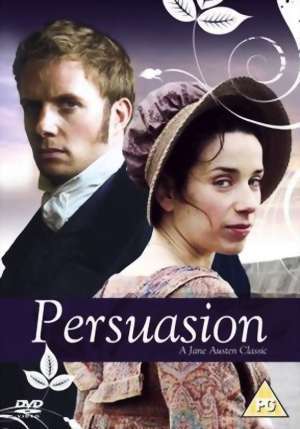
Persuasion (2007):

Royal Navy captain Wentworth was haughtily turned down eight years ago as suitor of pompous baronet Sir Walter Elliot's daughter Anne, despite true love. Now he visits their former seaside country estate, rented by his brother-in-law, admiral Croft, so the financially stressed baronet can afford a fashionable, cheaper residence in trendy Bath. First the former lovers meet again on the estate, where they feel vibes again, but neither dares admit them until it seems too late.

In my opinion, this is my favorite Jane Austen movie adaptation. I loved Pride & Prejudice, but in no ways are the character's emotions unspoken. I think Anne is a sweet lady, caught up in circumstance, and Wentworth is not only handsome, but worth the wait. For anyone who ever had to love someone from afar (ME!!!), then this is the movie for you.


Yes, all these movies involve romance, intrigue, mystery, passion, music, great dialogue, and unspoken desire. I will probably end up watching them more times than I can count. Oh, and did I fail to mention my obsession with Celtic Thunder? :)

Thank you so much for reading. Please feel free to share your favorite movies and music in a comment below. I'll look forward to reading them.


Happy writing!
-Diva J.

  • Digg
  • Del.icio.us
  • StumbleUpon
  • Reddit
  • RSS