


Dear readers,
 I'm on the home stretch for completing this novel and I'm so excited to announce that it will be part of a series or saga. I much prefer the term 'saga', because it sounds more epic. The problem is I can't seem to come up with a series name yet. (I'll address those concerns later on in the post.) Although, I do have several other books in mind for the saga, The Earl's Son is actually a sequel to another book I wrote years ago.
This Victorian Era saga is about an aristocratic family who are victims of political strife. There is action, suspense, revenge, mystery, deception and above all, romance. I hope you enjoy the novels as much as I do writing them.
My theme for this post is: What is the best writing advice you've ever received?
Believe it or not, after years of talking to other writers, joining workshops workshops, and participating in a critique group, I've heard a lot of great advice on writing. One such recommendation came from none other than my fiance who reads a lot of Fantasy (Jim Butcher, Tracey Hickman/Margaret Wies, etc.) Our relationship involves a lot of conversation and despite his inexperience in my genre, I read him what I've written for the day in hopes to receive an opinion that sticks. So often he'd repeated a phrase which never left my mind. I think about it a lot when I write.
The words I remember most from him were...
Don't underestimate your readers.
It's true. Readers know more than they admit. Of course, a writer could give a whole history lesson on farming (like I did in To Love An Irishman), but it's really hard to avoid describing things that are relevant for a topic without thinking your reader will find the content boring. In my current project, I have several fight scenes where I describe my hero using martial art styles. You'd think most women reading romance novels wouldn't know the actual names of these moves...so, I describe the process. My fiance encouraged me to be more descriptive and hold less back in my writing.
Don't be afraid to open up to your readers. After all, they want the whole experience your novel gives them.
Including, the parts you think are boring.
Description and details go along way. Use them to your advantage.
Please feel free to share your advice in a comment below. Oh, and if you also have recommendations for naming a series or saga, then share those, too. Thank you for reading!
Happy writing!
Diva J.
The Best Writing Advice I'd Ever Received


Writing and Music Are Acts of Love
When I feel unmotivated, I turn to music. When everything in the world seems to go wrong, I put in my favorite CD and let the melody show me the magic in the air. Although, I'm a very big fan of punk rock, specifically alternative, I listen to more and more instrumental lately. Of course, my guilty pleasure is Celtic music.
Today, I needed an intervention. I awoke early and for some reason couldn't move myself into action. I had emails piling up, content to write and other miscellaneous tasks to perform, including the creation of this blog.
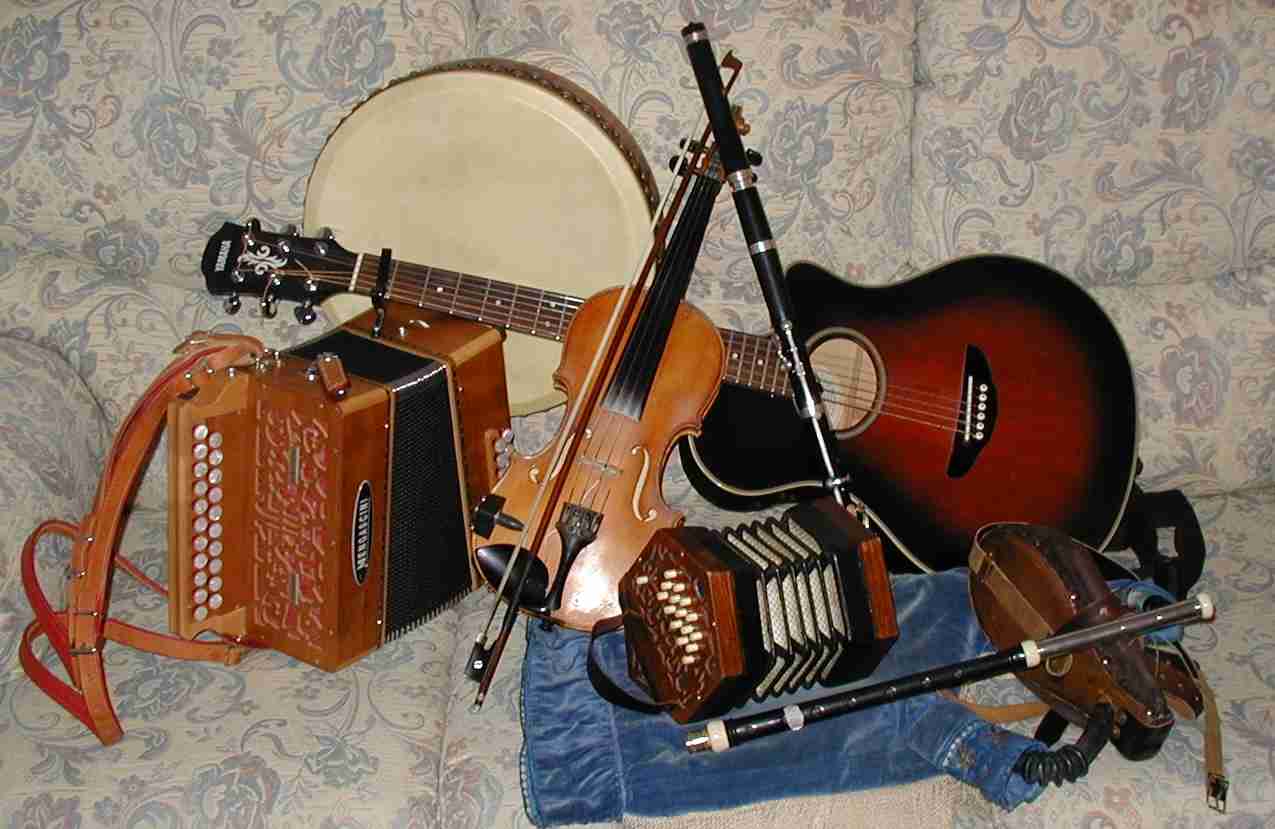 |
| From left to right: Button Accordion, Bodhran, Fiddle, Concertina, Guitar, Flute, and Uilleann Pipes. |
Ireland is rich in literature that understands a soul's yearnings, and dancing that understands a happy heart.
– Margaret Jackson
In my novel, To Love An Irishman, one of the main things that bring the couple together is Celtic music. The ceili, or group of musicians--traditionally, up to ten (called a band) who specialized in creating music for dancers--arrive and Ciaran cannot wait to show Aveline how to do an Irish jig. Drums, fiddles, flutes, and pipes are what they're most known for. Some modern bands now include guitar, piano, saxophone, snare drum with woodblock, double bass, piccolo, and even banjos. These bands gained wide popularity during the 1950s/60s. Ceili bands gain promotion through competitions and festivals still going on today.
If I ever get to visit Ireland, I intend to embrace the Celtic folk music scene.
Music helps me write by:
--Setting the mood, tone, or scene of my novel.
--Opening my mind to more creativity.
--Taking me away to a different time and place where all anyone had to tell a story with was an instrument and a voice.
Do you have a passion for music? What kind of music inspires you to write? Feel free to leave a comment below. Thank you for reading!
Happy writing!
Diva J.

Find Your Author's Voice And Don't Let It Go
Hello, readers! I just wanted to let you know that this will be another short post. For this, I am sorry. I would really like to get back to giving more detailed writing craft tips with examples, but I've been so busy with wedding planning, college starting, and of course, finishing my work in progress.

Isn't this what I preach all along?
Here are some helpful tips on establishing your voice as an author:
-Write poetry.
-Transcribe conversations you can overhear in public places.
-Copy a couple of pages from a scene by a writer you most admire.
-Write a lot!
-Use music (or whatever else gets your creative juices flowing) to get the words out.
-Know your characters. (Remember the interview I did with the hero from To Love An Irishman, Ciaran O'Devlin?)
-Learn how to self-edit.
(For more information on author voice, please visit this site: Finding Your Voice)
Remember, these tips are intended to help you. Every one has their own method for success. Would you like to share your way of discovering your author's voice? I'd love to hear it in a comment!
As always, thank you so much for reading.
Happy writing!
Diva J.
Show Me Your Ways
In a time when actions don't speak louder than words, we tend to overlook many important reasons why description is so important to our existence. Of course, our thoughts portray so much more than what we say. Now a days people prefer electronic communication (phone, email, etc.) instead of writing a letter. Although, I'm not going to go into the history of written correspondence, I will tell you that we are not as challenged as we were then. Now all it takes is a laugh or a smiley face to know someone is happy.
 |
| Click on the picture to watch a quick writing lesson! |
My favorite ways to SHOW are:
-Through dialogue.
-Through setting or character description.
-Through using all five senses.
My favorite ways to TELL are:
-Transitions through scenes.
-Interspersed back story.
-Through dialogue.
The great thing about dialogue is that you could use it for both telling and showing. In a sense, writing a narrative is telling a story, but don't bore the reader. Remember, we want our characters to be memorable. Show your readers their world.
Thank you for reading! How do you use show vs. tell in your novels?
Happy writing!
Diva J.
To Be Or Not To Be Continued...
Since we all read last week how I write with passion, now you have a chance to learn how I add spice to my novel. Yes, I call suspense/conflict the flavor ingredients, because they are integral parts of your book's recipe. We all know the four parts of a book: The set-up, the response, the attack (I call it rising action!), and the resolution. For movies with three acts, the response and the attack are combined, and this second act is called the confrontation. (You could read more about this on Storyfix.)
I love reading and learning my craft. Writing romance is so exhilarating, but sometimes I like to research another genre so I could improve my own writing and add a little flavor. I think when you look outside the box, you experience another perspective you might not have noticed before. In my most recent works, you'll notice how I sprinkle just enough suspense in to keep my readers interested.
Here are 5 ways you can add suspense in your novel:
 |
| Probably one of the most iconic suspense tactics. |
2) Raise the stakes and keep them high. Life gives us good/bad consequences no matter if we make wrong or right decisions. This also works for your hero/heroine. Without a crisis, or something causing them not to reach their goal, our books would be boring indeed. This is one of my favorite ways to add suspense, because in a way you as the writer are calling the shots. In my novel, there is a carriage crash, a fist-fight, a carriage chase, and a shooting to name a few instances where the tension is raised, but the plot is slowed down when this happens thus causing a complication. Don't hold back on your writing, readers could tell the difference.
3) Include many complications. I know stakes could count as complications, but don't confuse them with the pointy, wooden weapons we use on vampires! Use your antagonist to the greatest advantage. Not only is time against your hero/heroine, but the choices he or she made can create a dilemma. Ex: Alex grinned. All talk, no play, makes the bandits run away. Now that he was free and the woman was favorably shaken, he had two options: Escape, or free her from her controlling brother. From this example we see my hero has a complication. Whether he truly cares about the woman he wanted to free or not, his choice is not going to be easy, because he still has "her controlling brother" (the villain) to overcome first.
4) Create a memorable villain. Don't make your villain so awful that you'd want him to die off in the first or second chapter. At least, not yet. Drinking, gambling, and bedding wenches is a very mediocre way of describing him in a way where you are disgusted in his habits, but he is worth keeping around. Of course, other genres have different ways of showing their antagonist. Mysteries use a transparent villain to hide who they are until later, while an actual suspense wants you to know who he is right now. I think romance tends to mix the two or at least use either to the greatest advantage in the novel. No matter what you do with the villain, he has to be a worthy enough contender against the hero/heroine. In my work in progress, you find out fairly soon that the antagonist, Oliver Attwood, is the heroine's brother and has a firm dislike for the hero's family. These are givens. Although you know his ties with the hero/heroine, this does not set him apart from anyone else. You learn his intelligence and motivation later on. This makes him memorable. (Don't worry, women can be villains, too!)
Most readers care about the characters' journeys above all. We know a romance will end with a happy ending, we know the villain in a mystery will be discovered at the end, etc. The most important part of a story is how they got there.
Of course, mystery and suspense writers will give you more ways and an even broader insight into suspense, because that is what they thrive upon, but these are the ways I incorporate conflict into my romance. Many of the examples I give you are from my current work in progress, The Earl's Son. You may think I'm giving away pertinent information about the plot, but what I'm actually doing is showing you the spices I use for my recipe, not the main ingredients. ^_~ For more suspense topics not covered here and to read someone else's perspective, please visit: Writers Digest: 9 Tricks To Writing Suspense
When you think you can't, you can. When you think you can, you will. Never give up!
Do you use conflict/suspense in your novels? If so, please feel free to share some of your tips with the rest of us. I do love learning new tricks of the trade. :)
Happy writing!
Diva J.
Shameless Summer Giveaway Hop
As you know, summer is a great time to relax and enjoy the sun. When the weather outside is hot, I love to have a nice picnic near a river or lake. I love watching the sun's rays dance off of the water's surface while I eat a sandwich, sip a nice cold beer, and enjoy some fresh-cut watermelon.
The farmers in my novel, To Love An Irishman, are no exception. Sometimes the only great place to cool off is in a nearby river or lake.

For a chance to win an e-book copy of To Love An Irishman, leave a comment with your email address below. What is your favorite thing to do over the summer?
EDIT: CONTEST IS CLOSED. Congratulations to the winner, Foretta! Thank you to everyone who participated in the giveaway hop. :)
Happy writing!
-Diva J.
The Rules of Writing With Passion
 When an author tells a story, no matter if they write romance or not, they are doing what makes them happy. At least, I hope you do what you do for good reasons. I mean we can't depend on the money coming in, and who knows how many people will buy your finished product (if/when you get published), but what we do know is how to make what we write the best. I came up with this plan to add more passion into my work when I was reading someone else's book. The emotion on every page was heightened and the character's seemed to connect through the air. I know this sounds crazy, but it is possible for everyone to make their pages sizzle with words.
6 Writing Tips For Success
 2. Write freely and as rapidly as possible and throw the whole thing on paper. Never correct or rewrite until the whole thing is down. Rewrite in process is usually found to be an excuse for not going on. It also interferes with flow and rhythm which can only come from a kind of unconscious association with the material.
3. Forget your generalized audience. In the first place, the nameless, faceless audience will scare you to death and in the second place, unlike the theater, it doesn’t exist. In writing, your audience is one single reader. I have found that sometimes it helps to pick out one person—a real person you know, or an imagined person and write to that one.
4. If a scene or a section gets the better of you and you still think you want it—bypass it and go on. When you have finished the whole you can come back to it and then you may find that the reason it gave trouble is because it didn’t belong there.
5. Beware of a scene that becomes too dear to you, dearer than the rest. It will usually be found that it is out of drawing.
6. If you are using dialogue—say it aloud as you write it. Only then will it have the sound of speech.
What Does The Word Mean Literally?
I've heard many people talk about the importance of words in a novel. The way we write them in determines their meaning and could add emphasis to the message we convey. Some writers, especially those who like history, would never let an 'okay' slip from their characters or allow them to respond with an 'awesome'. I know I certainly try not to.
I've always had a fascination with the English language. One of my dreams growing up was to go to college and get a degree in the subject. Every time I am interested in something, I don't stop finding out as much as I can about it. I guess you can say I endeavor to persevere.

Today, I wanted to show you ten words that have changed meaning over the years.
1) Decimate - The original meaning was "to reduce by one-tenth", now it means "to destroy a great number of". Ex: The population was decimated by a plague.
2) Disinterested - This word used to mean "not interested", now it means "not influenced". Ex: ...a disinterested decision by the referee.
3) Enormity - Some know it as "outrageous or heinous character", now people refer to it as "greatness of size, scope, extent, or influence". Ex: The enormity of such an act of generosity is staggering.
4) Fortuitous - It used to mean "occurring by chance", but now means "lucky". Ex: ...a series of fortuitous events that advanced her career.
5) Fulsome - Which used to mean "abundant, generous, full", but now means "disgusting; sickening; repulsive". Ex: ...a table heaped with fulsome mounds of greasy foods.
6) Ironic - Which used to mean "counter to expectations or what is appropriate", but now means "coincidental". Ex: It was ironic that I was seated next to my ex-husband at the dinner.
7) Literally - It used to be confused with "figuratively", but now it is used "in the literal or strict sense". Ex: What does the word mean literally?
8) Notorious - It originally meant "widely and unfavorably known", but now people use "infamy". Ex: An infamous gambler.
9) Peruse - Which used to mean "to use thoroughly", now it means "to read through with thoroughness or care." Ex: ...to peruse a report.
10) Plethora - Its original meaning was "overabundance; excess", but now it means "abundance". Ex: ...a plethora of advice and a paucity of assistance.
(Words found on Daily Writing Tips and in the Dictionary.)
Of course, all these words are listed in the dictionary with both meanings, but when it's spoken in modern-day conversation, you'll better understand their relation to the sentence in which it's used.
Do you know any words that have changed their meanings? I'd love to know your thoughts in a comment below.
Happy writing!
-Diva J.
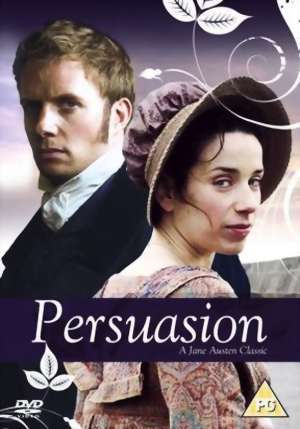
My Top 5 Watched Movies For Research
 In this adaptation from Elizabeth Gaskell's novel set during the Victorian Industrial Revolution, Margaret Hale is forced to move to Milton, which is in the north. She takes offense to the people, and most of the time she does not agree with the handsome textile manager's, Mr. Thornton's, views. Although their difference in beliefs overwhelm them, there is a chemistry that ignites their passion.
Wuthering Heights (2009):
 Given the choice between a life of comfort (with Edgar Linton) and a profound love (with Heathcliff), Cathy's actions have repercussions for multiple generations in this haunting story of turbulent passion and revenge.
Jane Eyre (2006):

Cranford (2007):
 In the 1840s, Cranford is ruled by the ladies. They adore good gossip; and romance and change is in the air, as the unwelcome grasp of the Industrial Revolution rapidly approaches their beloved rural market-town.
When Characters Come Alive
So, I have a woman in my mind who wants me to write about her. She is from the Regency era and her name is Anne. I know it sounds cliche, but this is how all my novels start. I can't get characters out of my mind, then I write about them. I currently have two works in progress, dozens of novel ideas, too, but when I can't even sleep due to these ideas clouding my head, I don't know what else to do then put them on paper. Usually when I write it down, the character leaves me alone, until the next scene does the same thing. These characters feel like real people. They have emotions, aspects, and personalities. Each one tells me how they want to be remembered, and it's what I write about. I feel like each one is an aspect of me from a past life or experience.

There is a muse urging me every step of the way. Some days, my work in progress does not seem very appealing. Sometimes I'd rather read or write other ideas somewhere else.
Do you ever have a larger than life experience when you write? Like some unknown force is providing you with the information? Does your book literally feel like it's about to give you a hug after you write it? I know it sounds funny, but writing is not a passion for nothing.
There are times when I wish I could pen out a manuscript in a month. The reality is it takes me much longer than that to finish a novel. I think it's because of my writing style and just who I am. I take my time in all things. I'm patient. Oh, and did I mention I'm a perfectionist. One of these days I'll develop a writing rhythm, and words will pour from me like water hurdling down a waterfall.
All good things come in time. I'm a firm believer in this idealism.
Thank you for reading and supporting me through buying my book, To Love An Irishman.
Happy writing!
-Diva J.
My Internet Lifestyle
Okay. I admit it. Distraction is my own worst enemy. I don't think I could go a day without checking Facebook or Twitter. I know you're not the only one. Social media is contagious. I mean we tweet about EVERYTHING that happens in our lives. It's what people want to read right now.

Pinterest was started in 2010 and is an online bulletin board used to visually share information.
Okay. As writers, we sell a lot of books based on what our covers look like, right? Well what if you want to show people what inspired the characters, or the setting? I created a bulletin board based on my latest release. It's a visual walk-through of the book.
I'm also using a bulletin board right now to plan my wedding. I post pictures of wedding dresses I like, locations I want to get married at, and everything in between. My friends and family give me feedback on what I'm pinning.
 I think most people don't like Pinterest, because it's slowly taking away the prestige Facebook and Twitter offers. We spend so much time on there as it is adding friends, updating content, following people, etc. When a new social media outlet steps in, we have to start from scratch. Another reason why people don't like it, is because it takes away the written word. Of course, you can always write long captions to explain what the pictures mean. I've had many people 'like' my photos and place quotes underneath them. Young people love visually stimulating material. Sometimes the only way to influence someone is to show them.
For me, Pinterest is just another way to waste my time. At least, the pictures are pretty. :)
I know I've asked this before, but what is your favorite social media tool?
Happy writing!
-Diva J.
My interview with Ciaran O'Devlin